
Last updated November 25, 2026
 Whole-home duct cleaning
 Dryer vent cleaning
 Camera inspection
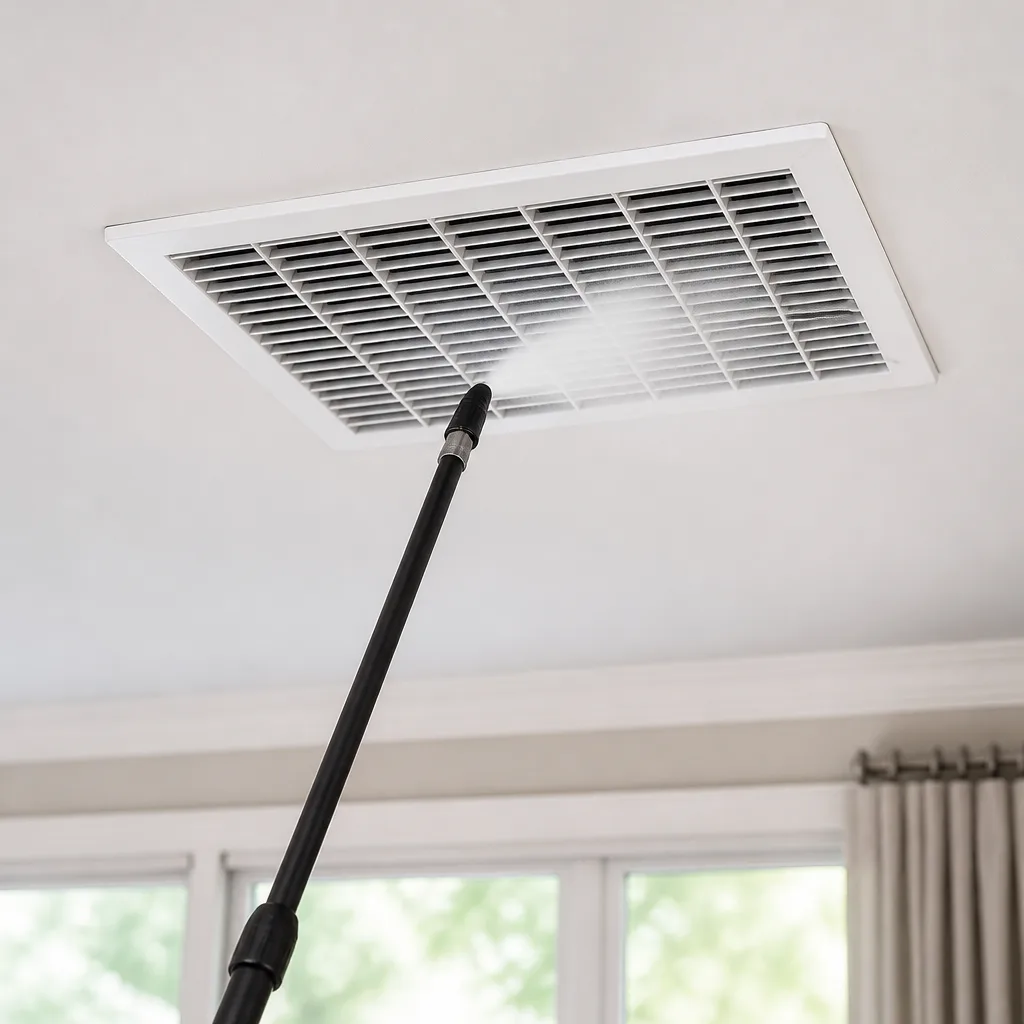 Sanitizing & deodorizing
Whole-system duct and dryer vent check with before-and-after photos - you see exactly what came out of your vents
That "$99 whole-house special" is a bait ad - the real number appears once they are in your hallway, or the "clean" is a shop-vac at the register. We photograph the inside of your ducts before and after instead.
Seasonal Air Duct Cleaning Care for Parker: Year-Round Homeowner’s Guide
Most seasonal duct care advice reads like a maintenance calendar someone photocopied in 2009: clean in spring, clean in fall, change the filter, repeat. It sounds tidy. It has almost nothing to do with how a house in Parker actually runs. Parker sits high on the Front Range, and that elevation shapes a year that isn’t really four equal seasons for your HVAC system. It’s a long, dry heating push, a windy shoulder season, a smoke-prone summer, and a short fall window before the furnace comes back on. Each one loads your ductwork differently. This guide walks through what each season actually puts into your ducts, how to watch for it, and when to call someone rather than guess.
Quick Answer
Seasonal air duct cleaning care in Parker means matching your cleaning and inspection timing to what each season deposits in your system, not to a fixed calendar. In practice that’s a pre-heating inspection in fall, an infiltration check in spring after the Palmer Divide wind season, and an assessment after any significant wildfire smoke event in summer. A full duct cleaning is usually warranted once you can see or smell accumulation, or after renovation, pest, or smoke exposure, rather than on a set yearly date.
Styles & brands we work with
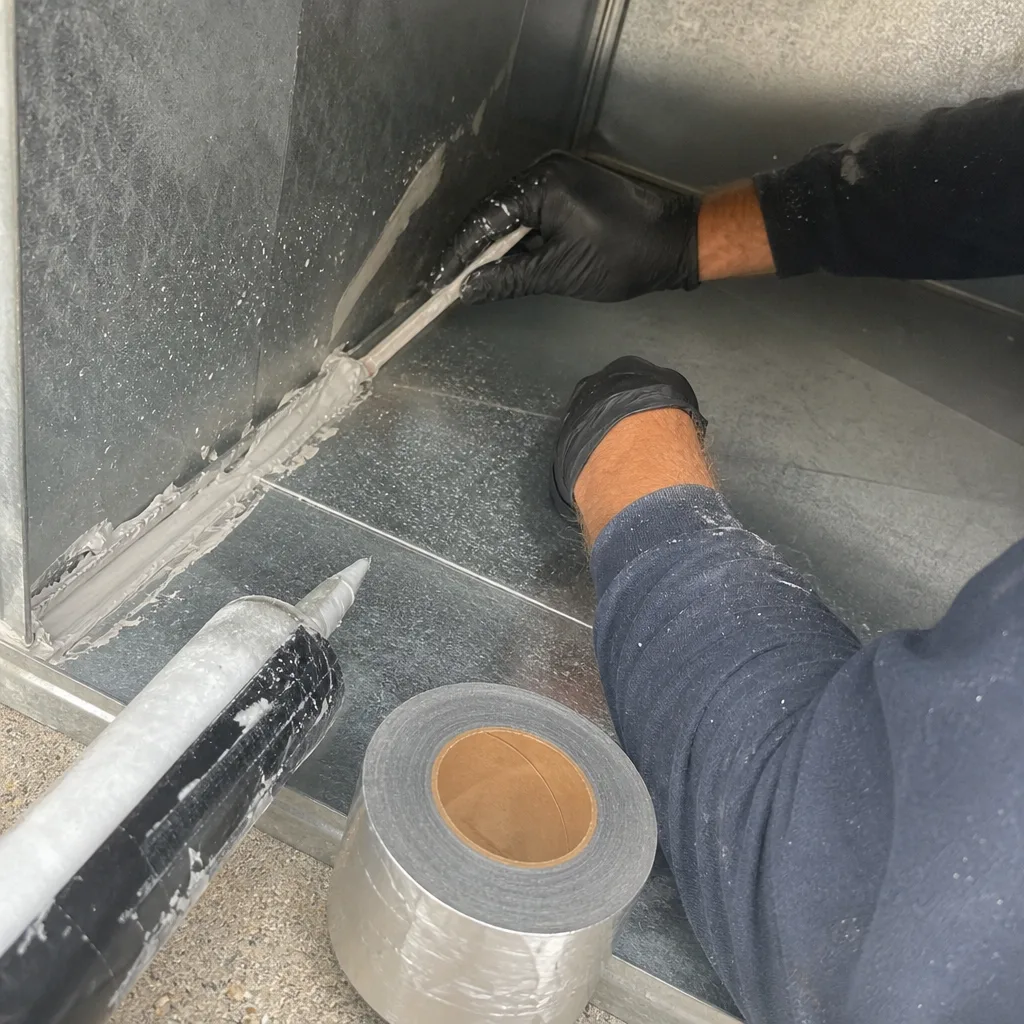
- Whole-home duct cleaning
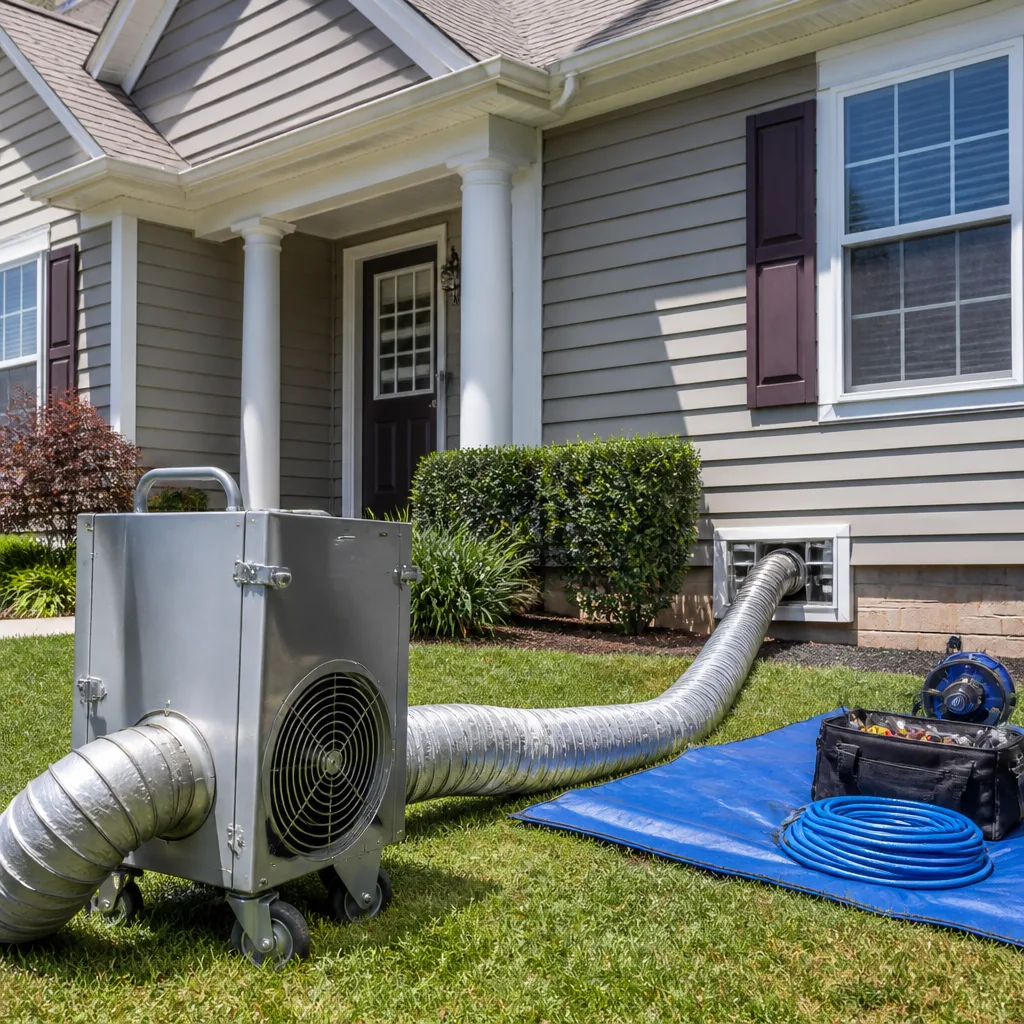
- Dryer vent cleaning
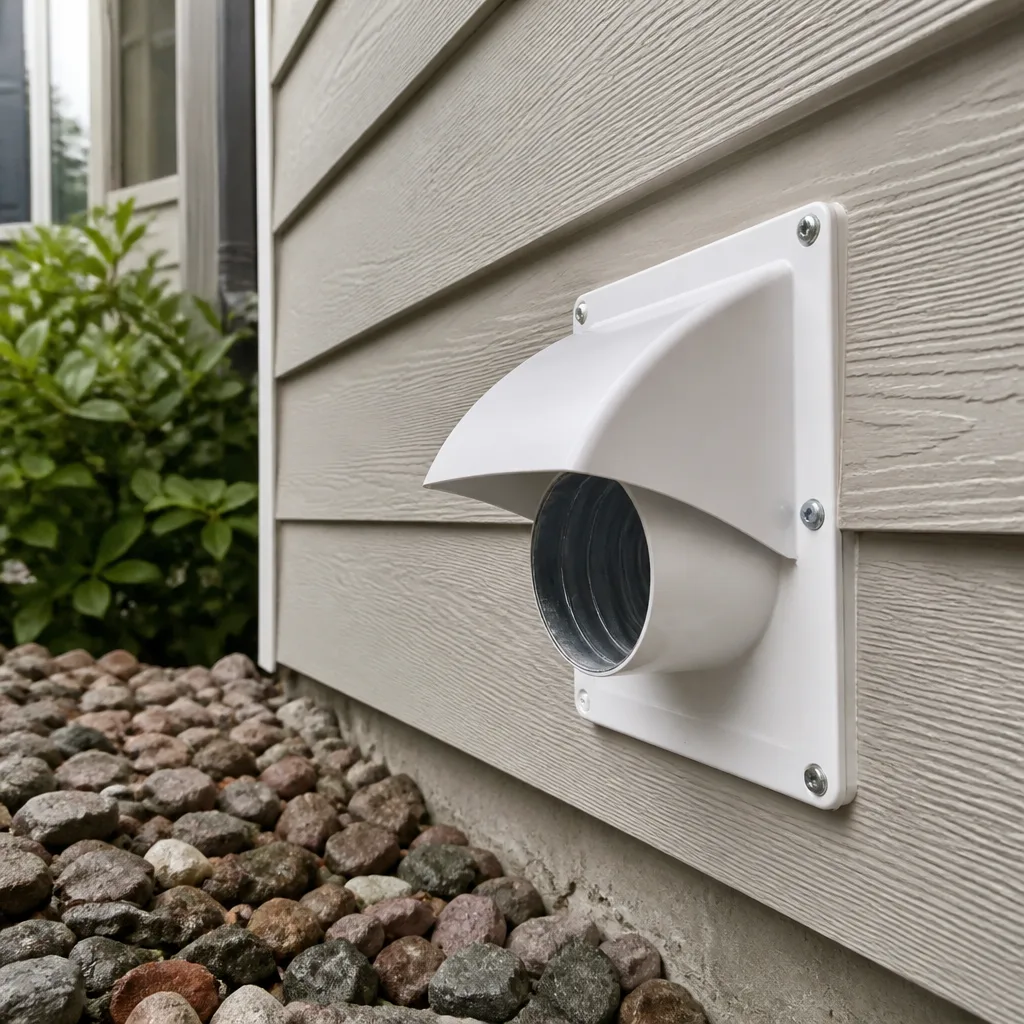
- Camera inspection
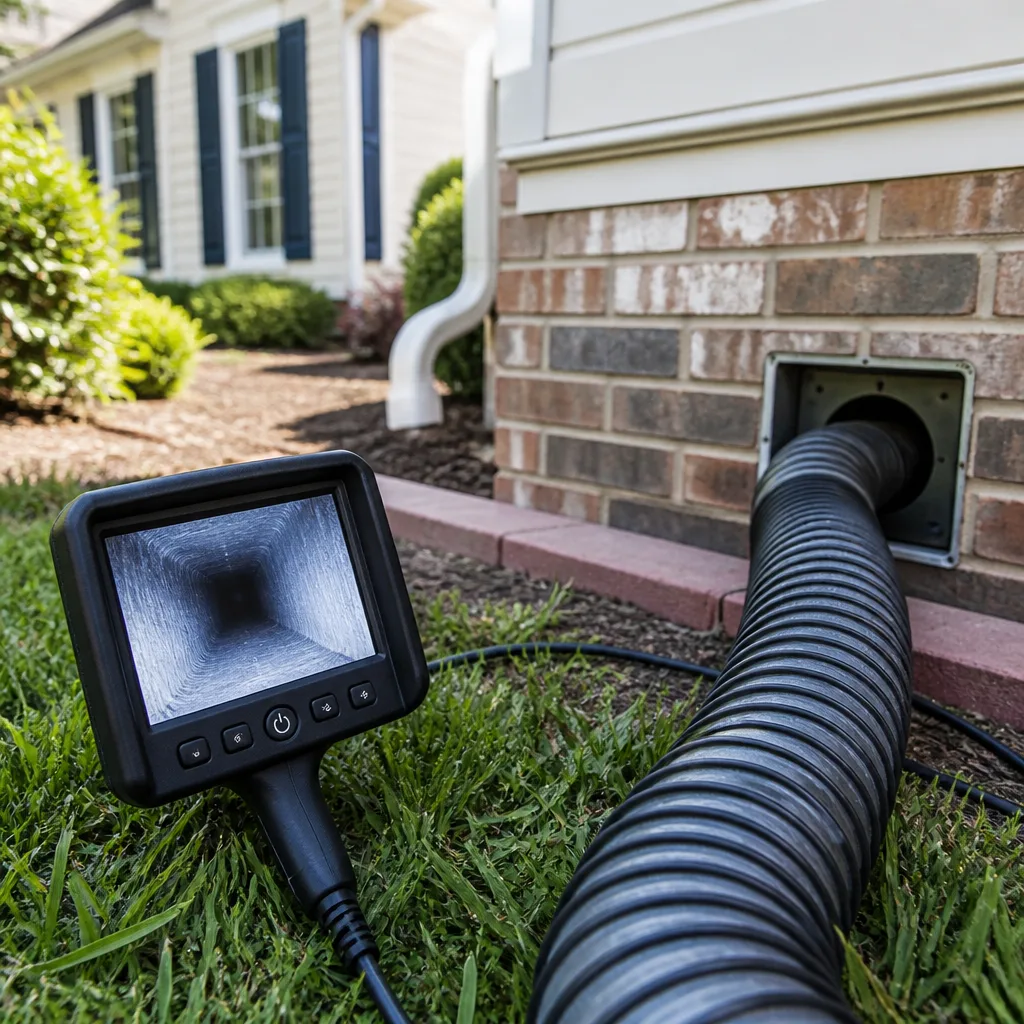
- Sanitizing & deodorizing
Table of Contents
- Why Parker’s Climate Creates Four Different Duct Stress Profiles
- Winter: Dry Air, High Heat Output, and Electrostatic Adhesion
- Spring: Palmer Divide Wind and Infiltration Season
- Summer: Wildfire Smoke Is Not the Same as Dust
- Fall: The Pre-Heating-Season Inspection
- Building a Year-Round Observation Routine
- Step-by-Step: A Full Seasonal Walkthrough of Your System
- Common Mistakes to Avoid
- When to Call a Professional
- Frequently Asked Questions
Why Parker’s Climate Creates Four Different Duct Stress Profiles
Parker homeowners run their heating systems hard from October through April. Elevation-driven temperature swings mean the furnace cycles on and off far more often than in a low-altitude city with a milder winter. Then June arrives and the system flips straight into aggressive air conditioning use. There’s no long, gentle gap in the middle where the ducts sit idle. That back-to-back demand cycle is the single most important thing to understand about duct care here, because it changes what accumulates and where.
In a climate with a genuine off-season, ducts get a rest period. Particulate settles, and some of it stays settled until the next cleaning cycle. In Parker, the airstream is moving almost constantly, just at different temperatures and with different outdoor air reaching the return side. The practical result is that debris loading isn’t uniform. Some seasons push fine dry particulate that clings to duct walls. Others push coarse grit that lands in the plenum and low runs. Others push combustion smoke that behaves differently again.
We treat these as four separate profiles because they call for four separate responses:
- Winter: high-output heating, very dry air, electrostatic adhesion of fine particulate.
- Spring: wind-driven outdoor particulate pushed in through open windows and every small envelope gap.
- Summer: cooling demand plus wildfire smoke events that deposit combustion particulate, not household dust.
- Fall: the short window to inspect and correct before the heating season locks in for six months.
Our technicians have up to 8 years of experience reading these patterns in Front Range homes. The rest of this guide is about giving you the same eye for your own system, so you call for cleaning when it’s actually due rather than because a calendar told you to.
Winter: Dry Air, High Heat Output, and Electrostatic Adhesion
Parker’s winter is cold, high, and dry. That dryness isn’t just a comfort issue for your skin and sinuses. It’s a duct issue. When indoor relative humidity drops through the heating months, fine particulate in the airstream loses the moisture film that would normally help it clump and settle. Instead, it stays airborne longer and picks up a static charge as it moves through the ductwork. Charged particles stick to duct walls the way a balloon sticks to a wall.
This matters because the particulate that adheres this way isn’t easily moved later by airflow alone. It builds a thin, stubborn layer on the interior surfaces of the trunk lines and the duct runs closest to the furnace, where air is hottest and moving fastest. If you’ve noticed a grey film inside your supply registers in late winter, that’s the visible edge of the same process happening out of sight.
What to watch during winter:
- Registers showing a visible grey or brown film.
- A dusty smell the first few minutes after the furnace kicks on.
- Static shocks when touching metal register covers.
- Dust settling faster than usual on shelves and dark surfaces.
- A furnace filter that loads up faster than in the shoulder seasons.
Higher-efficiency filtration, and a whole-home humidifier if your system supports one, both reduce how much of this winter load actually reaches the duct walls. We work with Honeywell and Aprilaire filtration and humidity equipment because that’s what’s already installed in most Parker homes, and knowing the equipment means we can advise on it rather than just talk about ducts in isolation.
Winter is not the season to schedule a full cleaning, unless you’ve had a specific event: renovation, a filter failure, or a furnace component swap. The reason is that the heating season is when the system is working hardest, and a full cleaning shuts it down. Better to observe, note what you see, and plan the cleaning for late spring or after the heating season releases its grip.
Spring: Palmer Divide Wind and Infiltration Season
Spring along the Palmer Divide is wind season. The ridge that runs through Parker and the surrounding Front Range foothills funnels strong, sustained wind events through the area, and those events carry fine soil particulate, pollen, and grit. When the weather warms enough to open windows, that outdoor load reaches your return air, your filter, and whatever bypasses the filter through envelope gaps and return duct leaks.
The shoulder season makes this worse than it sounds. Your system is cycling less than in deep winter, so the airstream isn’t the constant filtering action it becomes in January. Dust and grit settle into the return ducts and the plenum, waiting for the first hard AC season to lift it back into the living space. Spring is when you want to look, not necessarily when you want to clean, but the observation matters because what you see in April tells you what June will feel like.
Here’s what to check after a significant wind event:
- Look at your return grille. A visible dust line means the filter is doing its job, but it also tells you the outdoor load is real.
- Check any return duct you can see in a basement or mechanical closet for settled grit at low points.
- Look at windowsills and horizontal surfaces near registers and note how fast they reload.
- Smell the first air out of the supply registers on a cool morning. A dry, dusty note is a signal.
- Note which rooms reload fastest. That points to the duct runs fighting the most infiltration.
If your home has visible duct leaks, especially at return plenum joints and in attic runs, spring is the right time to address sealing. Leaks pull unfiltered air in from unconditioned space, and on a windy ridge those leaks are working against you year-round. Sealing is one of the connected services we handle, alongside air duct cleaning, because a cleaned system with open leaks just loads back up.
Summer: Wildfire Smoke Is Not the Same as Dust
Summer on the Front Range brings cooling demand and, in many years, wildfire smoke. Smoke events are the seasonal burden most duct cleaning guides gloss over, and they deserve their own treatment because smoke particulate behaves very differently from household dust.
Household dust is mostly larger, mineral, and textile, and it settles out of the airstream relatively quickly. Wildfire smoke on warm days carries fine combustion particulate, much of it small enough to travel deep into the duct runs and into the low-pressure zones behind register boots. It also carries volatile compounds that give it the smell people notice first. That smell lingers in ductwork and in the fabric surfaces attached to it, and it can re-release on a hot afternoon weeks after the smoke has cleared outdoors.
What smoke does inside your ducts, specifically:
- Coats the interior surfaces of supply and return runs with fine carbon-rich particulate.
- Settles into the plenum and the low sections of duct runs where air moves slowly.
- Imparts an odor that re-releases as the system warms.
- Loads filters fast, sometimes within days rather than weeks.
When is cleaning warranted after a smoke event? Our rule of thumb:
- A single bad day with the windows open: change the filter and watch. Cleaning is usually unnecessary.
- Multiple days of heavy smoke with the system running: inspect the registers and filter. If the filter is loaded and the smell persists after two filter changes, cleaning is warranted.
- Visible or persistent smoke odor in the home weeks later: cleaning plus sanitizing is the right response, not just filtration.
- Vulnerable occupants in the home (young children, asthma, allergy, older adults): err toward cleaning sooner, especially after multiple smoke events in one season.
Sanitizing is a separate step from cleaning, and it’s not a substitute for it. Cleaning removes the smoke particulate mechanically. Sanitizing treats the surfaces afterward. We stock Guardsman-grade sanitizing treatments for that step, and we treat it as part of the larger job rather than a quick fog-and-done.
Fall: The Pre-Heating-Season Inspection
Fall is the most consequential inspection window in Parker. Once the furnace comes on for the season, it typically stays on for six months. Whatever condition your ducts and connected equipment are in on the day you first heat the house is the condition they’ll be in for most of the year. A fall inspection catches what winter would otherwise lock in.
Parker homes with gas forced-air systems have a specific checklist worth walking every fall, ahead of the first real cold snap:
- Filter. Replace or clean it now, then again mid-winter. A loaded filter restricts airflow and loads the ducts downstream.
- Registers and returns. Vacuum the outsides, but look inside. Grey film here in fall means the ducts are carrying it into winter.
- Furnace cabinet and blower. A dusty blower move more dust through the whole system. A full hvac cleaning addresses the cabinet and blower alongside the ducts.
- Return plenum and visible duct runs. Look for settled grit, visible dust lines, and detached insulation or duct tape at joints.
- Dryer vent. Fall is the right time to check the dryer vent before a season of running the dryer more. Lint accumulation is a fire risk, not a comfort issue. See dryer vent cleaning for what that inspection should cover.
- Humidifier and filtration equipment. If you have a Honeywell or Aprilaire humidifier, this is the season to check the pad, the water panel, and the controls before the dry heating months arrive.
- Any recent renovation, pest event, or water intrusion. Fall is when to act on these before the heating season changes the loading pattern.
If the inspection turns up duct leaks, disconnected runs, or failed connections, seal and repair before heating season. Cleaning a leaking system is wasted effort. Repair and sealing are part of the same trade we work in, so you’re not coordinating a separate contractor to fix what the cleaning turns up.
Building a Year-Round Observation Routine
The most useful seasonal care isn’t a calendar. It’s a short, repeatable observation routine that generates real data about your own system. Most homeowners who think they need a cleaning every year either don’t, or wait two years too long, because they’re following a fixed schedule instead of reading the signals their own house is giving them.
Here’s the routine we suggest:
- Pick one register (the one in your most-used room) and photograph the inside of the grille and the first six inches of the duct run on the first of each month. The same angle each time.
- Note the filter date every time you change it, in the same place. After four changes, you’ll have a load rate, not a guess.
- Note smells. A dusty smell on start-up that fades in seconds is normal. One that lingers is a signal.
- Note reload speed. How fast do your dark surfaces reload after dusting? If it changes dramatically between seasons, the ducts are likely the source.
- Note major events. Renovation, pest activity, water intrusion, wildfire smoke days, and furnace or AC work all change the loading pattern. Write them down with a date.
- Review once a season. At each seasonal boundary, look at the data and decide whether cleaning, inspection, or nothing is warranted.
That’s it. It’s about ten minutes a month, and it converts seasonal duct care from a marketing schedule you’re supposed to follow into a set of observations about your own home. When you call a specialist, you call with dates, photographs, and notes, which is the difference between a cleaning decision made on evidence and one made on a vibe.
Step-by-Step: A Full Seasonal Walkthrough of Your System
Once a season, run this walkthrough. It takes about half an hour and keeps you ahead of the four seasonal loads described above.
- Shut the system off at the thermostat before you start. Don’t run the fan while you’re looking at registers or the return.
- Change or clean the filter, and write the date on it. This resets your load-rate baseline for the season.
- Photograph every accessible register, supply and return, inside and out, with the same framing each time. Store them with the date.
- Look into the return plenum through the filter slot with a flashlight. Note settled grit, lint, or debris.
- Check the mechanical closet or basement duct runs for visible dust lines, detached tape, or disconnected joints.
- Check the dryer vent for lint build-up at the exterior termination and where the duct leaves the dryer.
- Sniff the supply air on the first run after the walkthrough. Note any persistent smell.
- Write one sentence of summary in your notes: what changed, what’s new, what to watch.
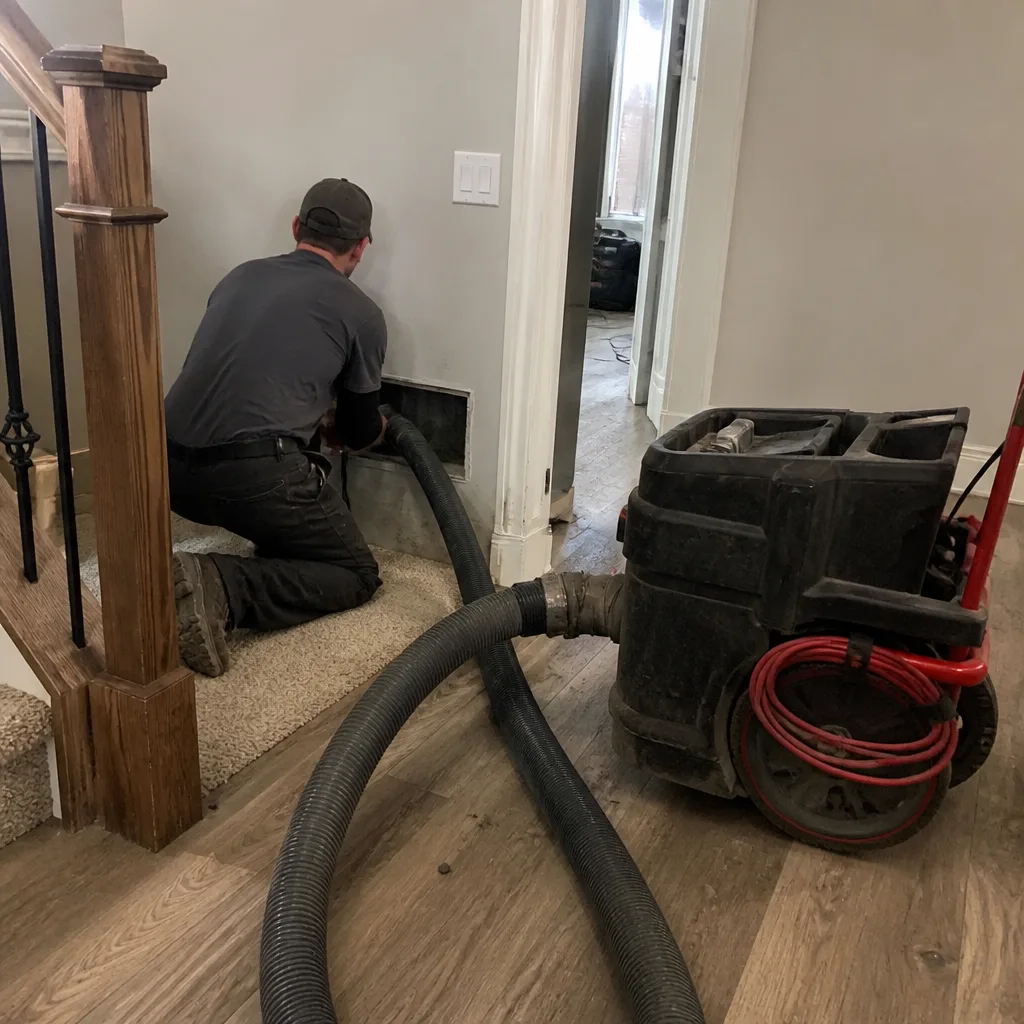
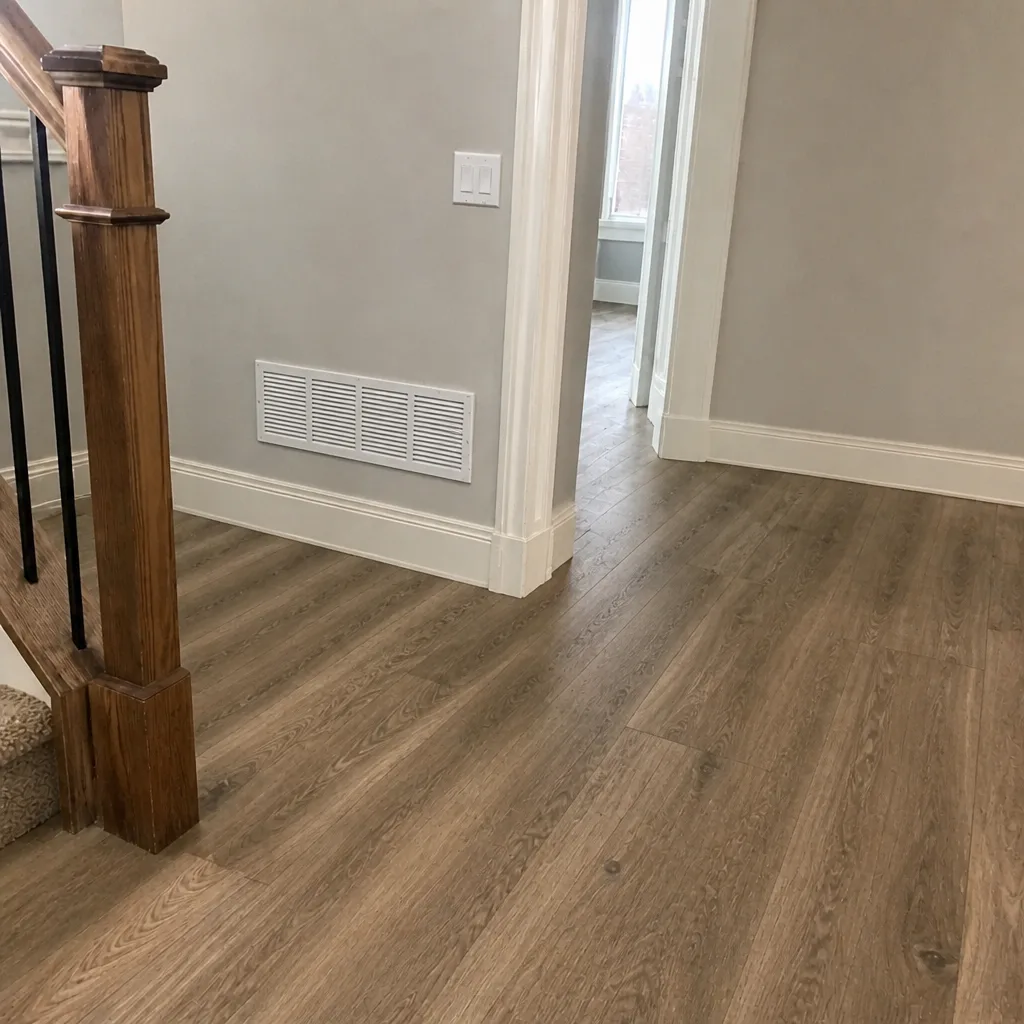
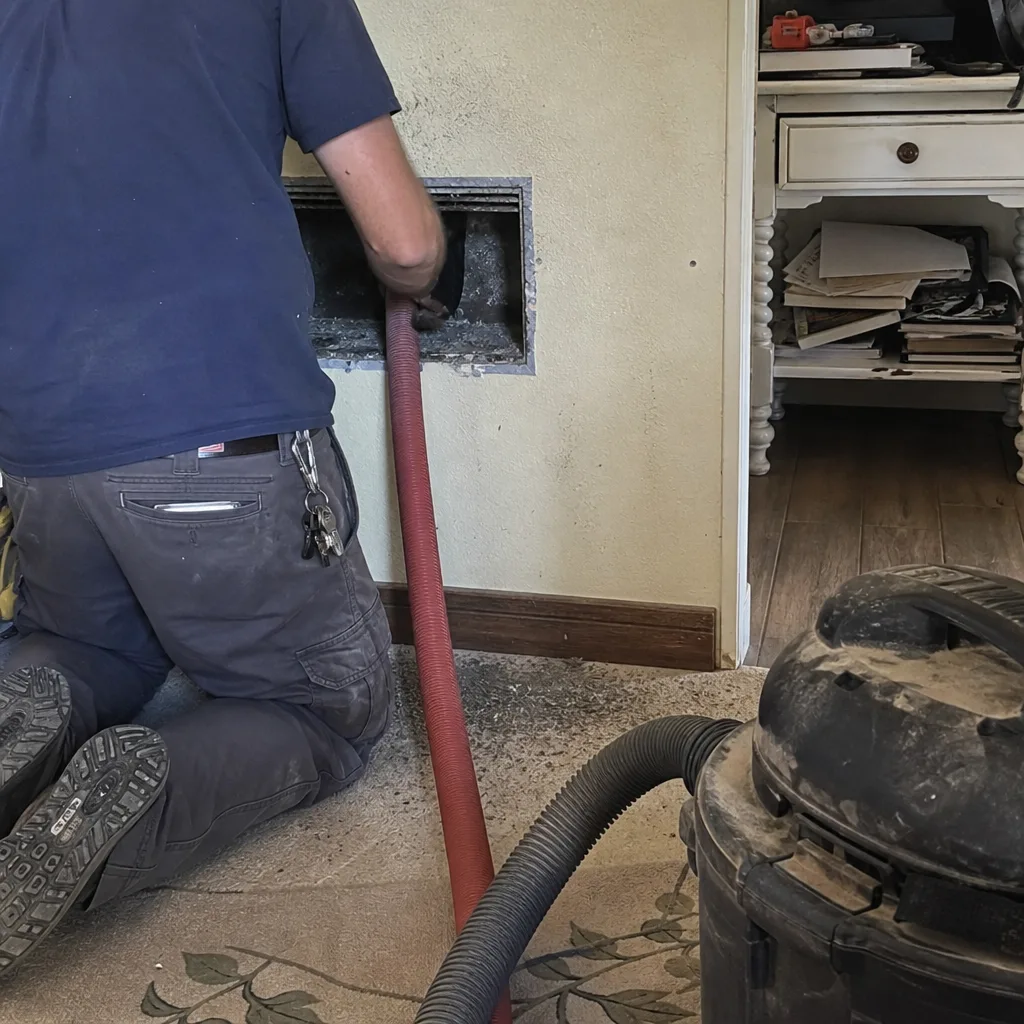
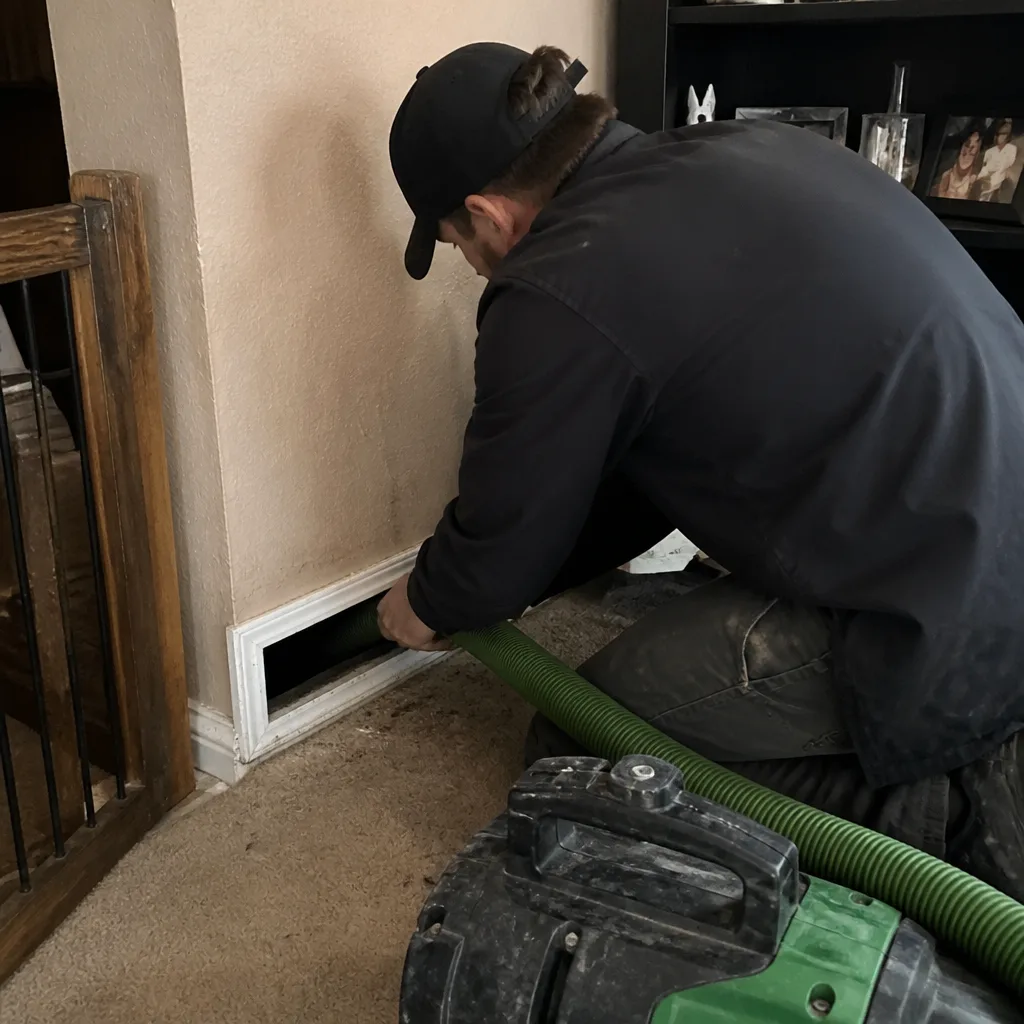
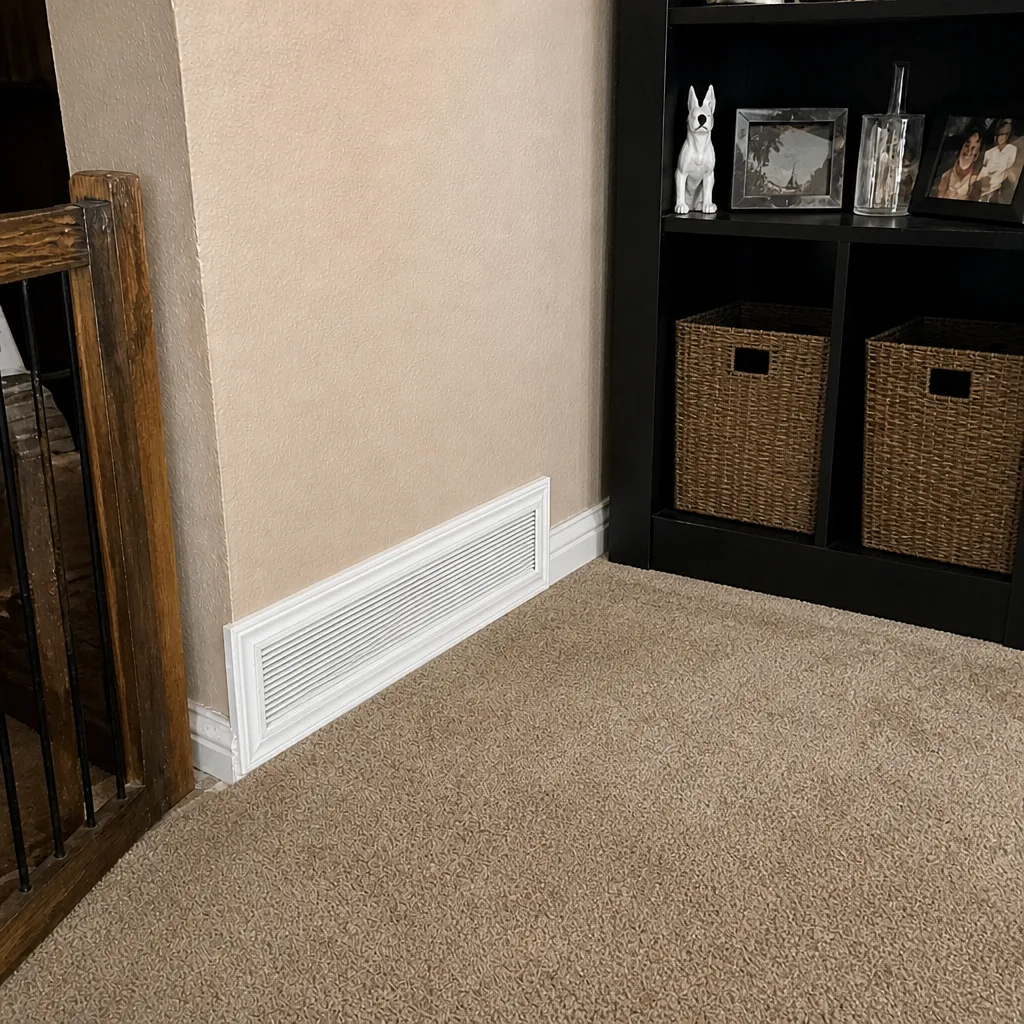
Documentation is why we treat before-and-after photos as part of the job rather than a marketing extra. You can’t compare what you can’t see, and a specialist who can show you the inside of your own ducts before and after cleaning is showing you the work rather than telling you about it. If we’re the ones doing the cleaning, you’re getting the same photographs of your own system, not stock images.
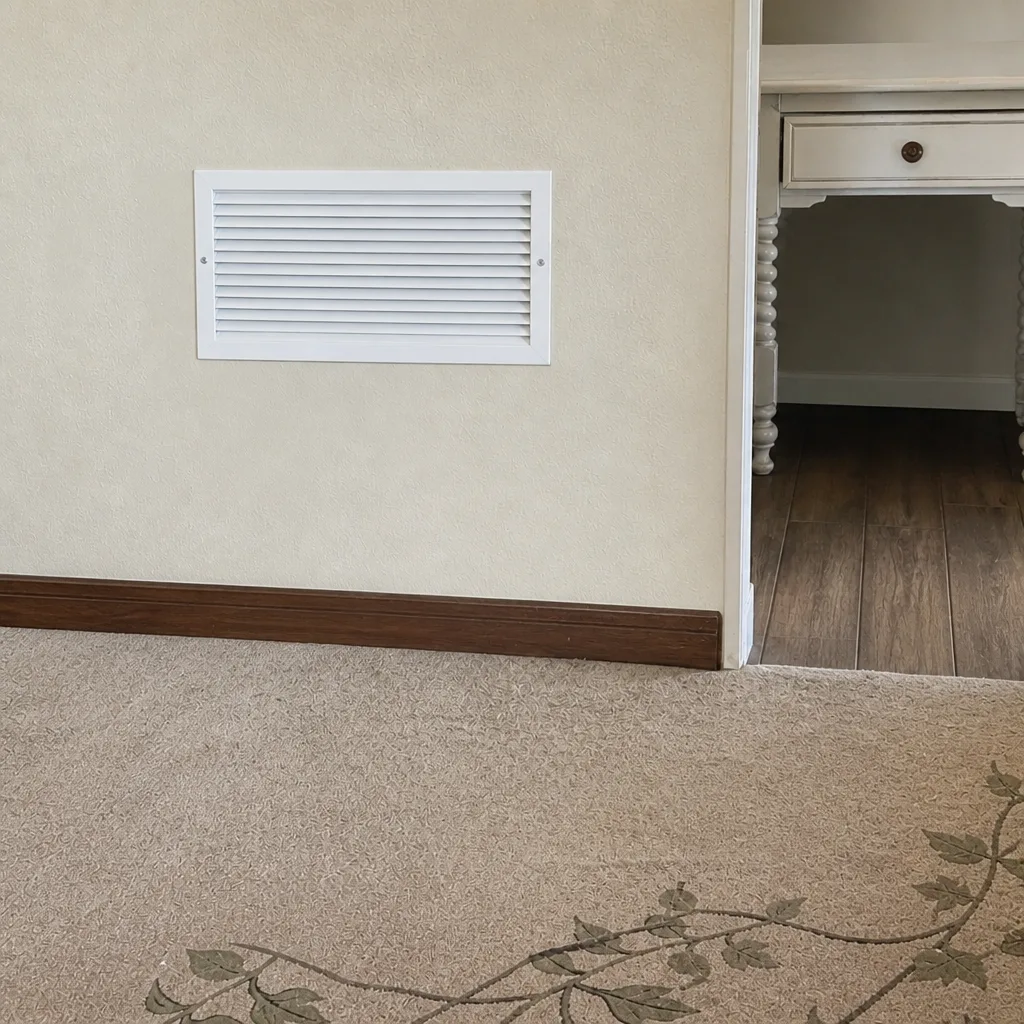
See the difference
 Before
 After
 Before
 After
 Before
 After
Common Mistakes to Avoid
- Cleaning on a fixed calendar rather than on evidence. A once-a-year cleaning without a reason behind it either wastes money or misses a problem that arrived in the off-cycle. Parker’s four distinct seasonal loads mean the right timing changes year to year based on what your house actually experienced.
- Ignoring spring wind events. Palmer Divide wind pushes outdoor particulate past the filter through every small gap. Skipping the post-wind check means the summer AC season lifts it back into your rooms.
- Treating wildfire smoke like ordinary dust. Smoke carries fine combustion particulate that behaves differently and carries odor. A filter change is not a full response to a multi-day smoke event.
- Cleaning without sealing leaks. A cleaned system with open return leaks reloads quickly. If the sealing isn’t part of the plan, the cleaning budget is spent twice.
- Using a shop vac or consumer tool on duct interiors. These tools move more dust into the room than out of the system. Purpose-built extraction equipment, plus negative-pressure containment, is the protocol that actually captures particulate at the source.
- Skipping the dryer vent because it “still works.” A dryer vent that’s still drying clothes can still be a fire risk. Lint accumulation in the vent isn’t a performance issue, it’s a safety issue.
- Cleaning the ducts while the furnace blower is dirty. A dirty blower moves contaminated air back into a freshly cleaned system. Clean the two together or the second job undoes the first.
When to Call a Professional
You’ll want a specialist rather than a generalist if any of these apply: visible debris or grey film inside registers that returns after cleaning; a persistent smell from the supply air that filter changes don’t fix; a multi-day wildfire smoke event with the system running and the smell lingering; recent renovation, pest, or water intrusion affecting the duct runs; visible duct leaks, disconnected joints, or insulation that’s separated; more than a year since the last full cleaning and any of the above present; or a new-to-you home with unknown system history.
Parker Air Duct Cleaning Pros offers free estimates in Parker. Call (877) 820-9183. We answer 24/7. Fast dispatch from 7am to 7pm, Sunday through Friday. The local pro is licensed and insured as the state requires. You get one flat price per system, agreed before work starts, plus before-and-after photos of your own ducts.
Frequently Asked Questions
Most Parker homes don’t need a fixed annual schedule. A cleaning is warranted when evidence points to it: visible or returning register film, a persistent smell from the supply air, a significant smoke event, renovation, pest activity, or visible duct condition problems. In our experience, an observation-based approach cleans the right system at the right time and often cleans less often than a calendar schedule would.
Yes. Low indoor humidity through the heating months reduces the moisture film that would help fine particulate clump and settle, so charged particles stay airborne and adhere to duct walls instead. That’s why the interior surfaces of ducts closest to the furnace often show a grey film in late winter even when the rest of the system looks clean.
Not always. A single smoky day with the windows open usually calls for a filter change, not a cleaning. Multiple days of heavy smoke with the system running, a filter that loads within days, or a smoke smell that lingers weeks later is when cleaning plus sanitizing becomes the right response.
The low quote often assumes a different scope: vents only, no containment, no duct interiors, no blower, and no photographs of the work. The real question to ask is what the technician will actually do inside the ducts and whether you’ll see the result. Our price is one flat price per system, agreed before work starts, with before-and-after photos of your ducts. Call (877) 820-9183 for an exact quote, estimates are free.
Yes, and for a Parker gas forced-air home it’s usually the right approach. The blower, furnace cabinet, and ductwork share one airstream. Cleaning one without the other sends particulate back into a freshly cleaned space. We handle the ducts and HVAC cleaning as connected work so you don’t have to bring in a second contractor.
It’s a separate job but it belongs in the seasonal walkthrough. Lint accumulation in the dryer vent is a fire risk independent of duct cleanliness, and fall is the right time to check it before a season of heavier dryer use. If you’re already having the ducts looked at, checking the dryer vent at the same time makes sense.
The Bottom Line
Seasonal duct care in Parker works best as an observation practice, not a maintenance calendar. The four seasons here deposit four different loads: winter’s dry-air electrostatic film, spring’s Palmer Divide wind infiltration, summer’s wildfire smoke particulate, and fall’s pre-heating window when corrections actually stick. Build a short monthly observation routine, walk your system once a season, and make the cleaning decision on evidence from your own home. If that evidence points to cleaning, you’ve got the right reasons to call.
When you’re ready to have it looked at, call (877) 820-9183 for a free estimate. We answer 24/7, fast dispatch runs from 7am-7pm, Sunday through Friday. We use Rotobrush rotary-brush extraction, Nikro HEPA-rated vacuum systems, and Abatement Technologies negative-pressure containment on every job. One flat price per system, agreed before work starts. Before-and-after photos of your own ducts, so you can see what changed. For an overview of who we are, start with Parker Air Duct Cleaning Pros. Our technicians have up to 8 years of experience.
Written by the team at Parker Air Duct Cleaning Pros.