
Last updated November 25, 2026
 Whole-home duct cleaning
 Dryer vent cleaning
 Camera inspection
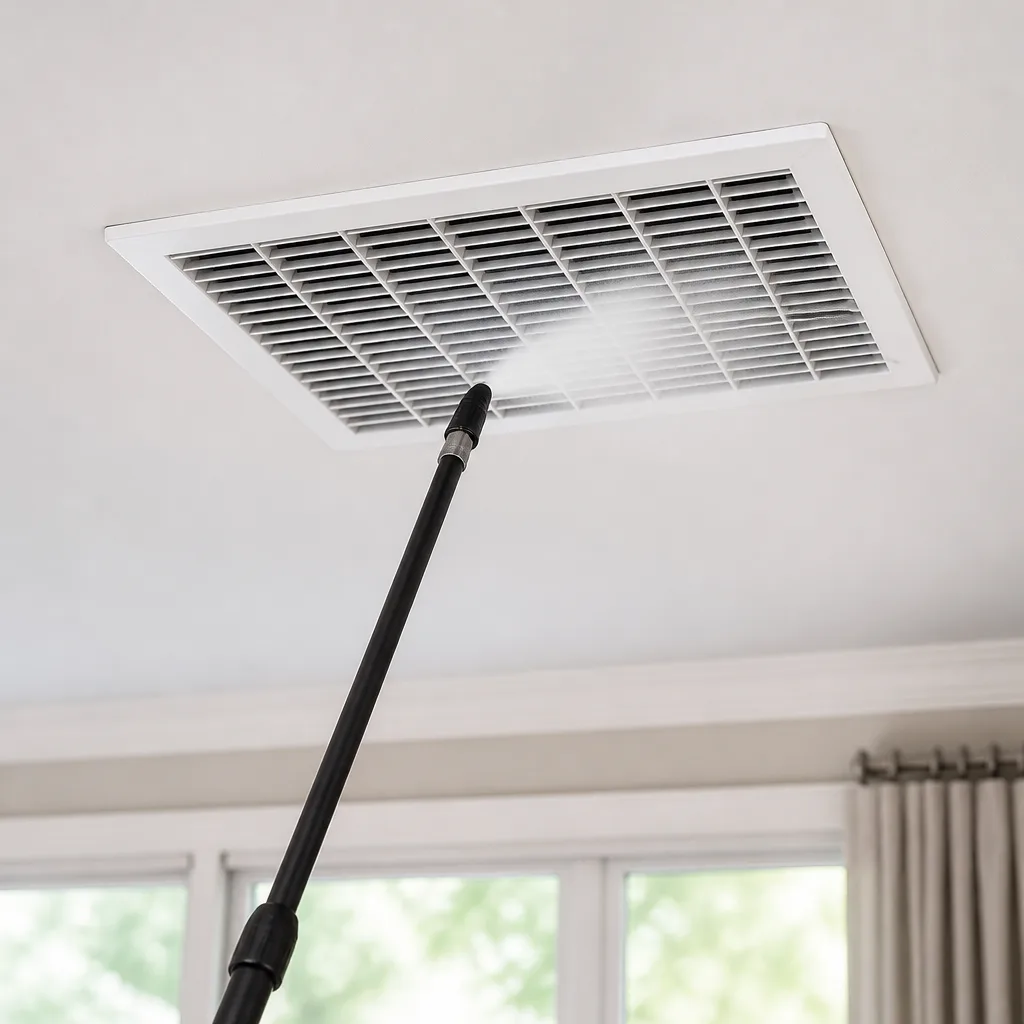 Sanitizing & deodorizing
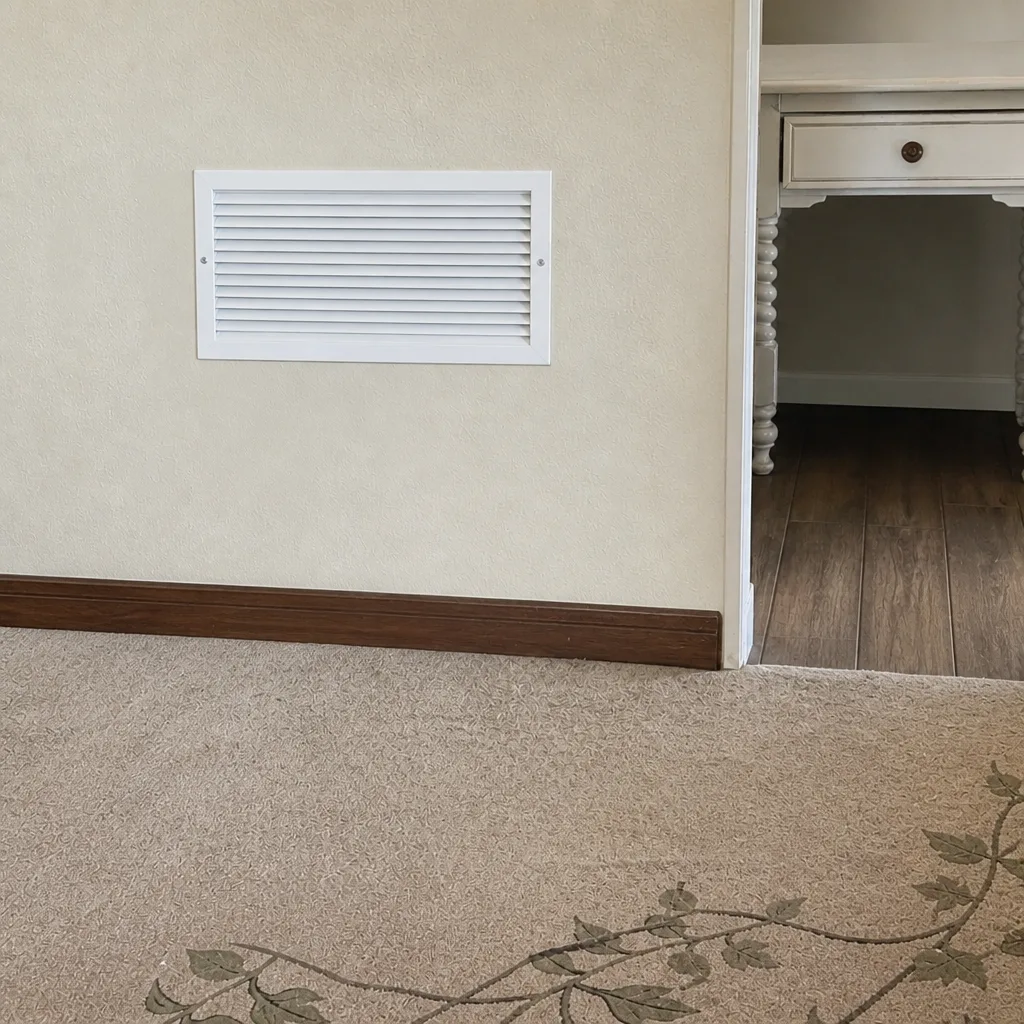
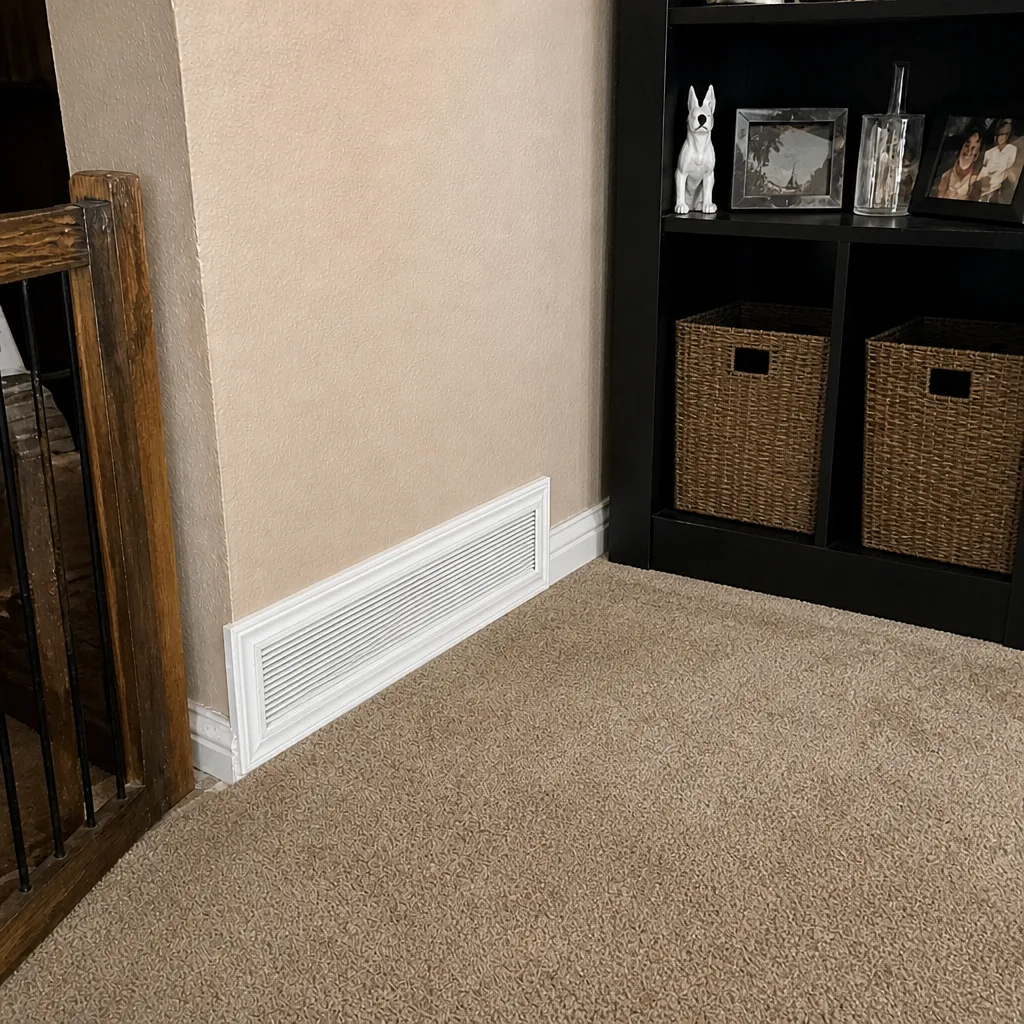
Whole-system duct and dryer vent check with before-and-after photos - you see exactly what came out of your vents
That "$99 whole-house special" is a bait ad - the real number appears once they are in your hallway, or the "clean" is a shop-vac at the register. We photograph the inside of your ducts before and after instead.
The Complete Guide to Air Duct Cleaning in Parker
Most air duct cleaning advice you’ll find online was written for a house at sea level. Parker isn’t that house. At over 5,700 feet, the air here is thinner, and your HVAC system has to move more CFM and run longer cycles to heat and cool the same square footage. That extra runtime pushes more particulate through your ductwork every year than the identical system would move in a lower-elevation Front Range city. Add a semi-arid climate that keeps fine dust airborne and construction crews opening new ground in Parker every season, and you get a contamination profile national guides never address. This guide maps what that actually means for your ducts, how a proper source-removal cleaning differs from a quick sweep, and how to verify the work was done right.
Quick Answer
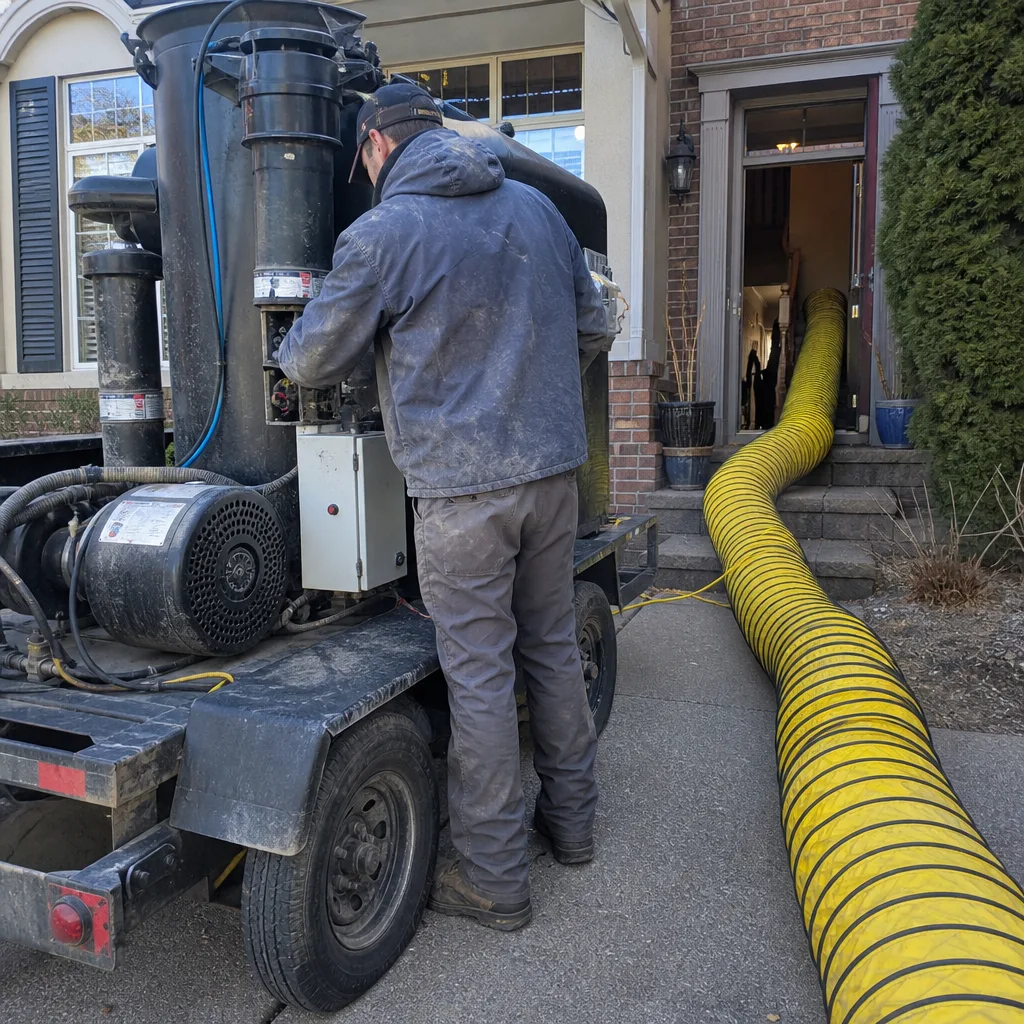
Air duct cleaning in Parker means mechanically agitating the entire duct system while a HEPA-rated vacuum under negative pressure captures the dislodged debris at the source – not just vacuuming visible registers. At Parker’s altitude and in its semi-arid climate, that deep cleaning is typically warranted every three to five years for most homes, and sooner after renovation, pest activity, or a new-home purchase. Professional-grade equipment such as Rotobrush rotary-brush systems paired with Nikro HEPA extraction, run with Abatement Technologies containment, is what separates a verified cleaning from a surface pass.
Styles & brands we work with
- Whole-home duct cleaning
- Dryer vent cleaning
- Camera inspection
- Sanitizing & deodorizing
Table of Contents
- Why Parker’s Altitude and Climate Change the Duct Cleaning Equation
- New Construction Dust in Parker Neighborhoods
- Source Removal Versus Contact Vacuum: What’s the Difference?
- The Step-by-Step Cleaning Process We Use
- What Else Gets Cleaned: Coils, Plenums, and Registers
- How to Verify the Cleaning Was Done Thoroughly
- What Air Duct Cleaning Costs in Parker
- How Often Should You Clean Your Ducts in Parker?
Why Parker’s Altitude and Climate Change the Duct Cleaning Equation
At 5,700-plus feet, air density is roughly 20 percent lower than at sea level. Your furnace and air handler don’t know that. They’re still rated to deliver a fixed volume of conditioned air, so they run longer to hit the thermostat setpoint. Longer runtime means more air cycles through the return and supply ducts, and every cycle carries whatever particulate is suspended in the airstream and deposits a thin layer on duct walls. Over a year, the accumulation inside a Parker system can outpace what the same equipment sees in a lower-elevation city.
The semi-arid climate adds a second layer. Humidity here stays low enough that fine dust – construction particulate, soil, pollen, skin cells – stays airborne longer instead of settling out. That suspended load gets pulled into return grilles on every cycle. Parker’s seasonal wind events push more of it into the outdoor air the system draws in.
There’s a third factor working at altitude: static pressure. Undersized or leaky ductwork becomes a bigger problem when the system is working harder, and every leak pulls unconditioned attic or crawlspace air into the supply side. Sealing is often as important as cleaning in Parker homes.
What this means practically:
- Dust accumulates faster than the “every five to seven years” rule of thumb suggests
- Filters load sooner, so check them every 30 to 60 days instead of quarterly
- Systems with restrictive filters or undersized return ducts will show dirty supply registers within a season or two of a cleaning
- Homes with pets or allergy sufferers benefit from shorter cleaning intervals
Our technicians have up to 8 years of experience working on Front Range systems, and the altitude effect shows up in the field. A Parker return plenum often carries noticeably more fine build-up than the equivalent home at a lower elevation.
New Construction Dust in Parker Neighborhoods
Parker has been one of the fastest-growing communities in Douglas County, and the construction dust from new builds doesn’t just affect the new house. When crews frame, drywall, sand, and finish homes in a developing neighborhood, drywall dust and fiberglass particulate go airborne. Nearby occupied homes draw that particulate into their return grilles and into duct systems serving existing residents.
Three patterns come up again and again in Parker:
- Newly built homes: Drywall dust, joint compound residue, and fiberglass from insulation installation collect in ducts before the first HVAC cycle even runs. Builders rarely clean ducts after construction, and the homeowner inherits a contaminated system.
- Neighbors of active construction: A home that was fine last spring can show a visible film on supply registers within months of nearby ground being broken.
- Renovation after move-in: Any remodel inside an occupied Parker home pushes drywall dust into the HVAC. Filter changes catch some, but plenty stays in the ducts.
The practical answer for new-home buyers is a cleaning before move-in. For existing homeowners near active construction, an inspection with a camera can tell you whether the accumulation is severe enough to warrant cleaning or whether better filtration and regular filter changes will get you by.
If you’ve recently moved into a Parker home and don’t know the system’s history, start with an inspection. Our air duct cleaning service begins with a camera walk-through before anything gets quoted.
Source Removal Versus Contact Vacuum: What’s the Difference?
Source removal is the industry-standard method for duct cleaning. Contact vacuuming is what many “cheap” services actually perform. The difference matters because only one of them actually removes the contamination living on duct walls.
Contact vacuuming means running a shop vac or lightweight vacuum over the visible register openings and whatever surface the hose can reach through the register. The deeper duct runs – especially the trunks and branch lines behind walls – stay untouched. Debris that’s been lightly disturbed gets pushed back into the airstream the first time your system cycles.
Source removal uses two pieces of equipment working together:
- A HEPA-rated vacuum under negative pressure connected to the duct system and pulling air toward the collection point, so dislodged debris gets captured rather than recirculated
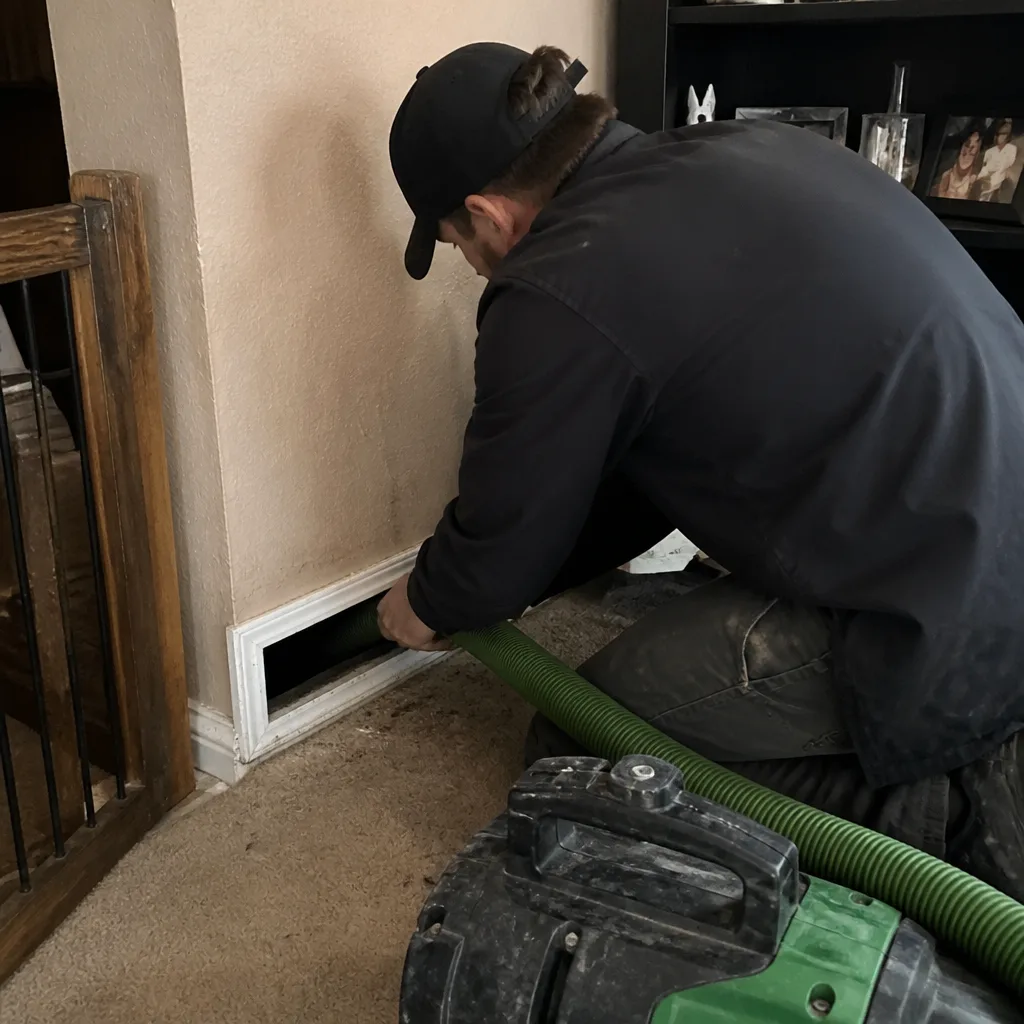
- A mechanical agitation tool – in our case Rotobrush rotary-brush systems – that physically contacts duct surfaces and scrubs the accumulation loose
The Nikro HEPA vacuum is a professional-grade unit rated to capture fine particulate. The Abatement Technologies air-filtration equipment we use provides negative-pressure containment during the job, a commercial-grade protocol adapted to residential work. That’s the same approach used in remediation, where containment isn’t optional.
How to tell which you were sold:
- Ask what equipment will be on-site. If the answer is “a big shop vac,” the cleaning won’t reach surfaces the vacuum can’t see.
- Ask about agitation. A vacuum alone can’t dislodge debris stuck to duct walls. Rotary-brush or compressed-air agitation is essential.
- Ask for before-and-after photos. Register-level photos are meaningless. Ask for the deep duct runs and the plenum, before and after.
- Ask about containment. Where does the dislodged debris go? If the answer is “back into your home’s air,” that isn’t source removal.
For a fuller walkthrough of the method, our HVAC cleaning page covers how the same source-removal approach applies to the equipment beyond the ducts themselves.
The Step-by-Step Cleaning Process We Use
A thorough cleaning follows a repeatable sequence. Skipping any step is where most “quick clean” jobs fall short.
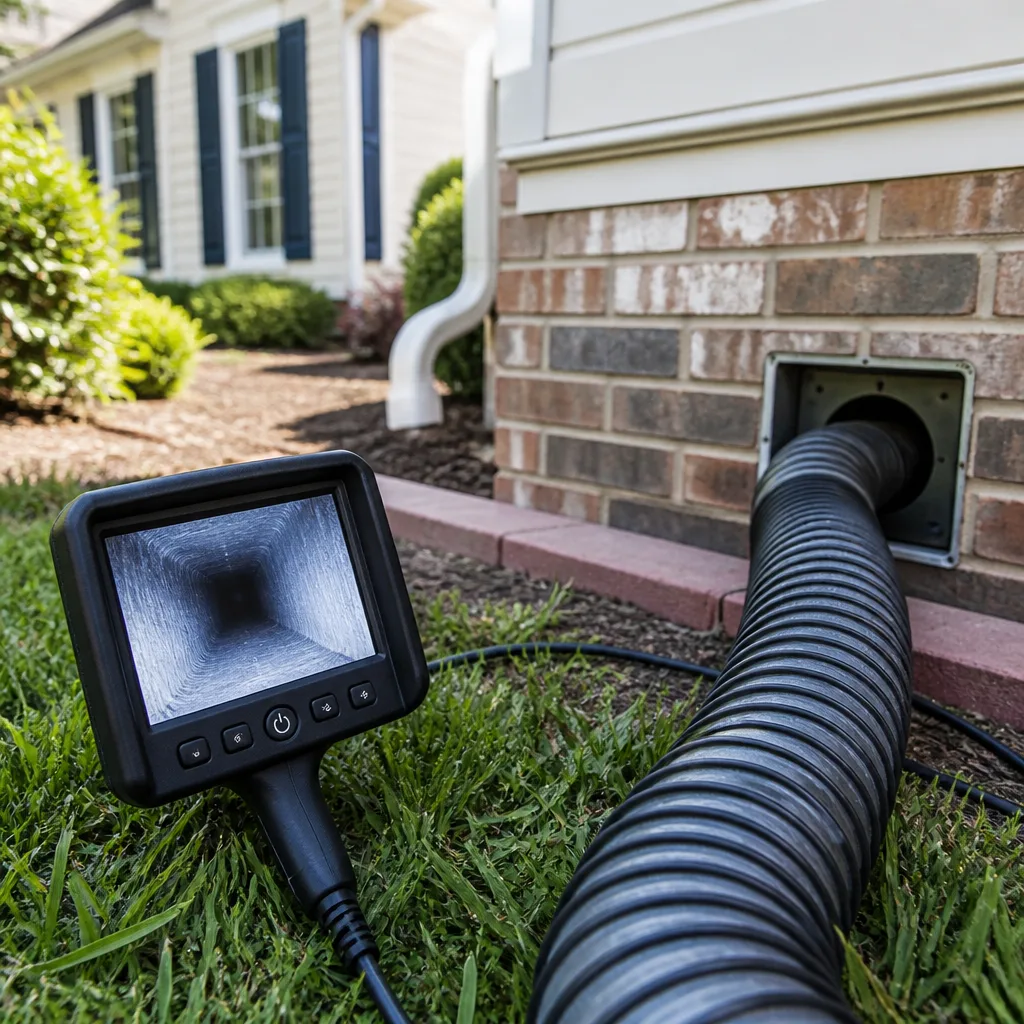
- Inspection. We walk the system with a camera, inspect registers and grilles, and check the air handler and coils. The inspection determines the scope of the work.
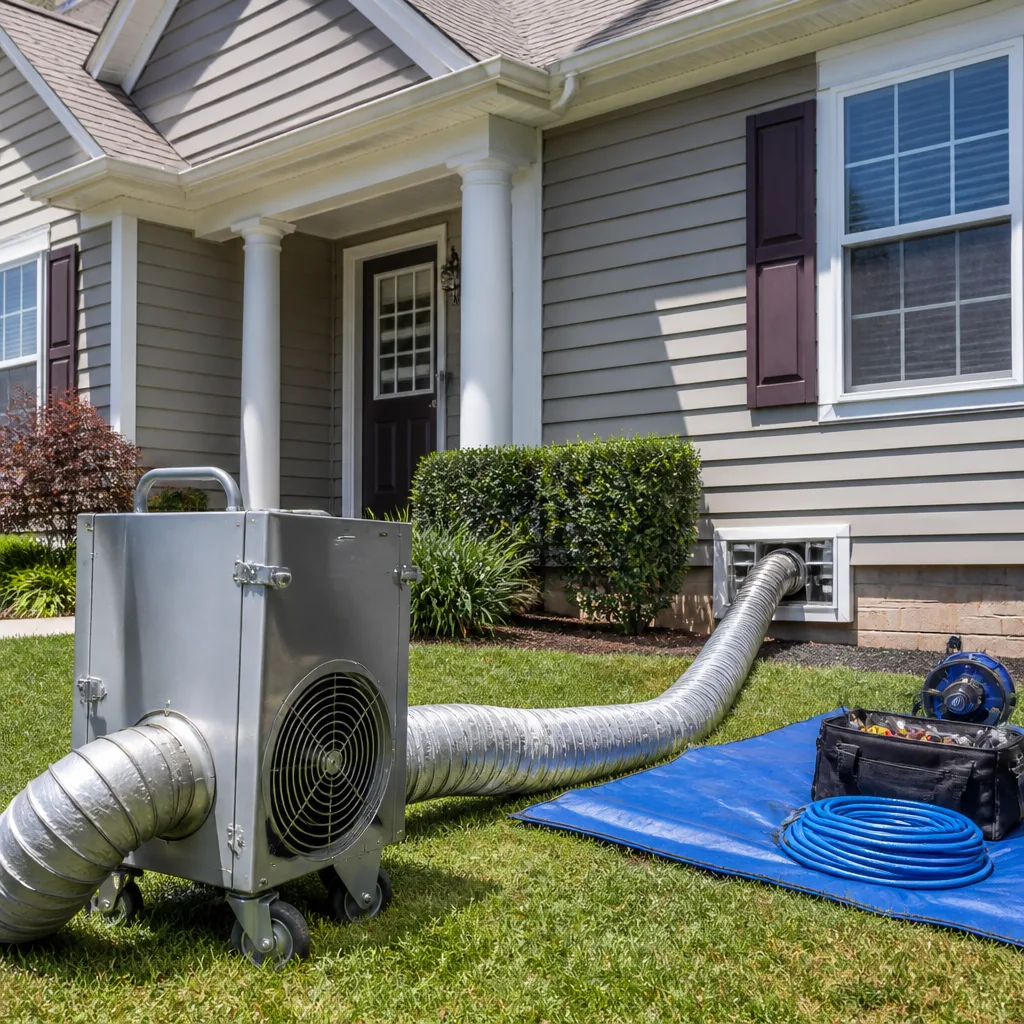
- Containment setup. Abatement Technologies filtration and negative-pressure equipment get positioned so dislodged debris has nowhere to escape into living space.
- Access creation. Small access holes are cut in the ductwork at strategic points to reach the deep runs. These are sealed after cleaning.
- Mechanical agitation. Rotobrush rotary-brush heads work through the supply and return runs, contacting duct surfaces and breaking loose accumulation. Compressed-air tools reach branches a brush can’t.
- HEPA extraction. The Nikro HEPA vacuum captures the loosened material at the source while the system remains under negative pressure.
- Air handler and coil cleaning. The blower wheel, evaporator coil, and plenum are cleaned. These are often the dirtiest components in the system and are frequently skipped by companies that only clean ductwork.
- Register and grille cleaning. Supply and return grilles get washed and dried.
- Sealing and re-inspection. Access holes are sealed, and a second inspection confirms the result. Before-and-after footage is captured for the homeowner.
- Optional sanitizing. Guardsman-grade sanitizing treatments are available as a separate service if contamination concerns call for it.
The whole job typically takes a few hours for a standard Parker home, longer for larger systems or heavier contamination.
What Else Gets Cleaned: Coils, Plenums, and Registers
The ducts are one part of the system. A thorough job addresses the whole air path, not just visible ductwork. Here’s how to tell which components are included versus what’s being sold as an add-on.
| Component | What It Is | Standard or Add-On |
|---|---|---|
| Duct runs (supply and return) | The main distribution lines | Standard |
| Plenums | The transition boxes at the air handler | Standard |
| Registers and grilles | The faceplates you see at each opening | Standard |
| Air handler and blower wheel | The fan assembly that moves air | Standard |
| Evaporator coil | The cooling coil in the air handler | Standard |
| Return drops and boots | The branches from return grille to plenum | Standard |
| Duct sealing / access hole repair | Closing leaks and access points | Add-on when leaks found |
| Sanitizing (Guardsman-grade) | Anti-microbial treatment | Optional add-on |
| Filtration upgrades | Recommendations for Honeywell or Aprilaire products | Consultation |
One thing worth flagging: if a company quotes “duct cleaning” but excludes the coil and plenum, the job is incomplete. The coil is often the single dirtiest surface in a residential system, and cleaning the ducts around a dirty coil just means new debris builds up faster.
We also service Honeywell and Aprilaire filter and humidity equipment already in the home. Those systems need to be running correctly for cleaner ducts to actually improve indoor air, and they need to be cleared of debris if they haven’t been serviced in years.
How to Verify the Cleaning Was Done Thoroughly
The single largest frustration homeowners report is that they can’t tell whether a cleaning actually happened. Here’s how to verify it before, during, and after.
- Before any cleaning starts: ask for a camera inspection of the return plenum and at least one supply trunk. If the company won’t show you the inside of the ducts before work, that’s your answer.
- During cleaning: the containment setup should be visible. Ask where the vacuum is connected and how dislodged debris is being captured. A crew that can’t answer that clearly doesn’t have a source-removal setup.
- After cleaning: ask for the same camera views as the “before” inspection, shot from the same angle. Clean trunk runs should show visibly lighter duct walls with no residual line of accumulation.
- Register check: supply registers should be visibly cleaner after the job. If they look the same, ask why.
- Ask for the collection point: where does the captured debris go? Every professional-grade system has a collection bag or drum that should be emptied and disposed of properly.
Before-and-after camera footage is the proof point. That’s why Rotobrush documentation is our standard: brush extraction shows up in the deep runs because the brush mechanically contacts the surfaces, and camera video captures it. Contact-vacuum services rarely offer the same documentation because there’s nothing deeper to show.
What Air Duct Cleaning Costs in Parker
Pricing for air duct cleaning varies with square footage, the number of registers, the number of HVAC systems, and the level of contamination. What most Parker homeowners actually need is a straight, per-system price – not a coupon that grows once the technician is at the door.
Typical estimated ranges for Parker homes look like this:
| Service | Typical Estimated Range |
|---|---|
| Air duct cleaning (single system, standard home) | Roughly $350 to $650 |
| Air duct cleaning (larger home or heavier contamination) | Roughly $650 to $950 |
| Air handler, blower, and coil cleaning | Roughly $150 to $300, often bundled |
| Dryer vent cleaning | Roughly $125 to $250 |
| Duct sealing | Priced per job after inspection |
| Sanitizing treatment | Priced per job after inspection |
Two questions to ask before booking:
- “Is this one flat price for the whole system?” If pricing is per vent or per register, the quote is not designed to be honest about scope.
- “What’s included?” A complete job should cover duct runs, plenums, registers, the air handler, blower, and coil. A quote that covers only “ducts” will inevitably exclude the coil cleaning as an add-on.
Written estimates set the final price. The ranges above are typical figures for Parker; the number in your estimate is the one that applies to your home. If a quote sounds too cheap to include the whole system, that’s usually because it doesn’t.
Our Parker Air Duct Cleaning Pros team provides free written estimates for any Parker address.
How Often Should You Clean Your Ducts in Parker?
Most Parker homes fall into a three-to-five-year cleaning interval, with tighter cycles for homes with specific risk factors. Altitude-driven longer HVAC runtimes make Parker homes accumulate debris faster than the generic national recommendation of every five to seven years.
Cleaning sooner than three years is warranted if you answer yes to any of the following:
- Pets in the home, especially two or more
- Any household member with asthma, seasonal allergies, or respiratory sensitivity
- Recent renovation or drywall work inside the home
- Active or recent construction within a few blocks
- A new-home purchase in the last two years
- Visible dust on supply registers or a recurring film on furniture
- Rodent or pest activity in the duct system
- Musty odor when the HVAC runs
- Evidence of moisture intrusion or visible mold near ducts
Between cleanings, two things make a real difference:
- Filter changes. Every 30 to 60 days at Parker altitude, not quarterly. Use a filter rated MERV 8 to MERV 11 unless your system was designed for higher filtration – Honeywell and Aprilaire media cabinets often allow higher MERV without choking airflow.
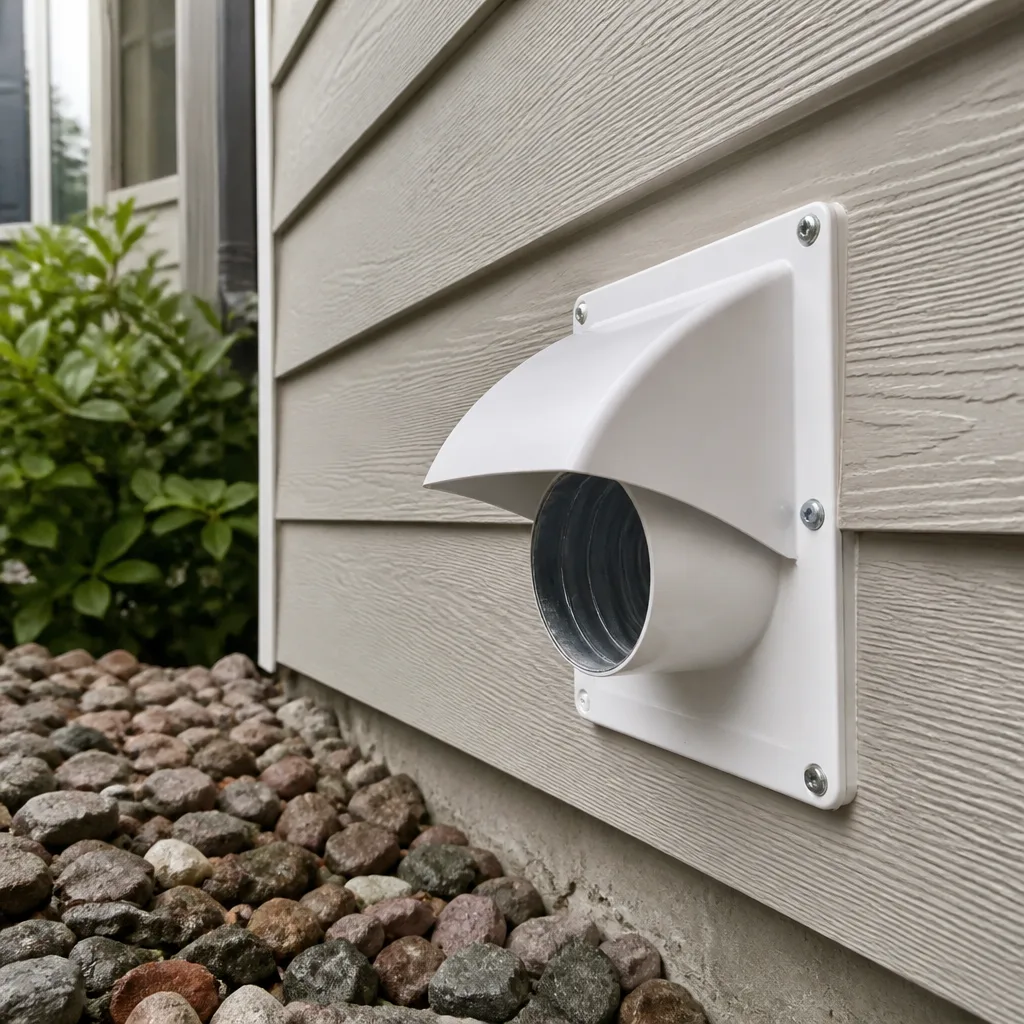
- Dryer vent cleaning every 12 to 18 months. This is a fire-safety service, not a comfort service. Lint accumulation in the vent line is the leading cause of dryer fires, and it’s invisible from the outside. Our dryer vent cleaning is a separate service for a separate risk.
If your ducts are also leaking at joints – common in older Parker homes – cleaning without sealing means the new-clean surfaces will pull in unconditioned attic air and re-dirty within a season. Cleaning and sealing together fix the problem; cleaning alone delays it.
Common Mistakes to Avoid
- Buying on price alone. The cheapest quote is almost always a contact-vacuum sweep of visible registers. For a Parker system that accumulated three or four years of altitude-accelerated dust, that job leaves most of the contamination in place.
- Accepting per-vent pricing. Per-vent quotes sound simple but leave you exposed – the price grows as they walk through the house. Ask for one flat price for the whole system, agreed before work starts.
- Skipping the camera inspection. If a company won’t show you the inside of the ducts before and after, you can’t know what was cleaned. Before-and-after footage is the only real proof of work.
- Ignoring the coil and plenum. Cleaning ducts around a dirty evaporator coil is a losing battle. The coil is often the worst surface in the system; insist it’s part of the job.
- Cleaning without sealing. Parker’s leaky older ductwork pulls attic air into the supply side on every cycle. A cleaning without a joint inspection just resets the clock briefly.
- Treating the dryer vent as a comfort item. It’s a fire risk, not an airflow complaint. Twelve to eighteen months between cleanings is the working standard.
- Filter changes as a substitute for cleaning. Better filtration slows accumulation. It doesn’t remove what’s already there. If a home has three-plus years of accumulation, the filter isn’t reaching it.
See the difference
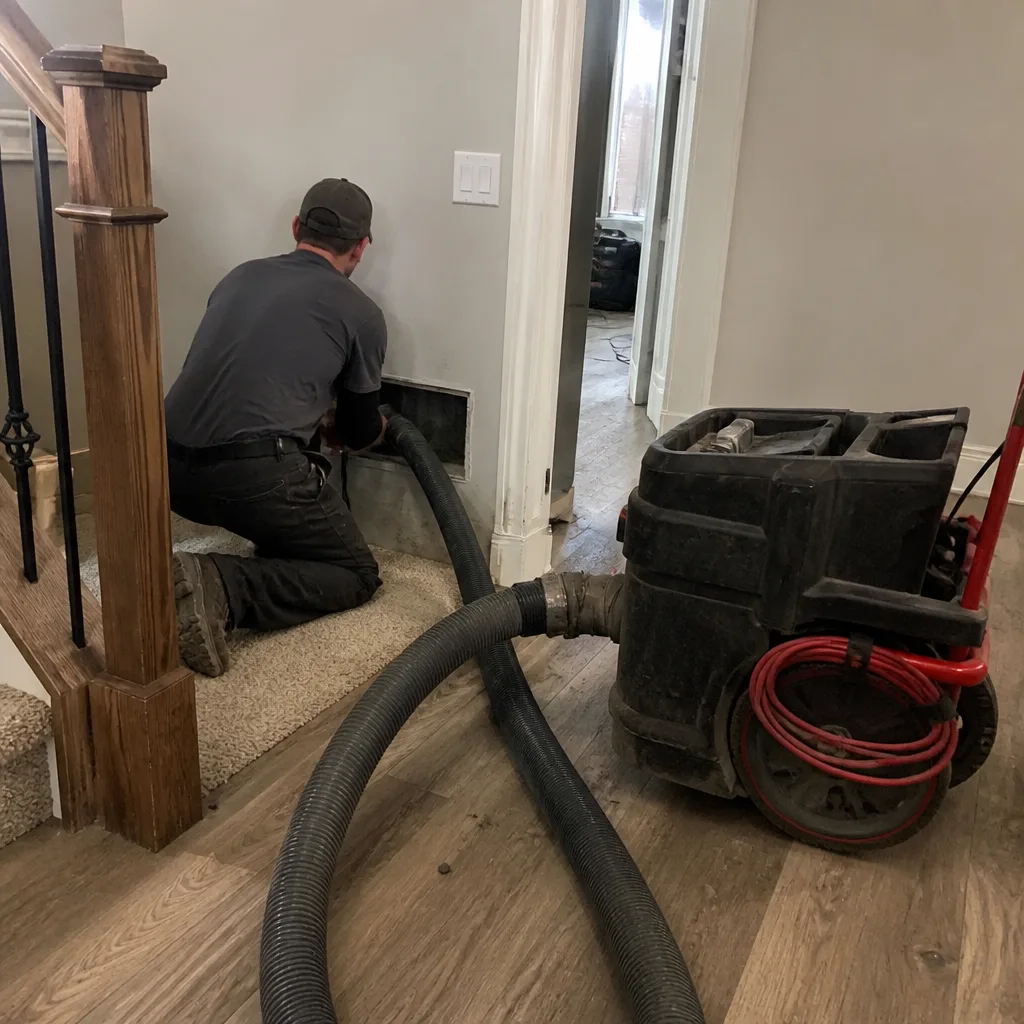 Before
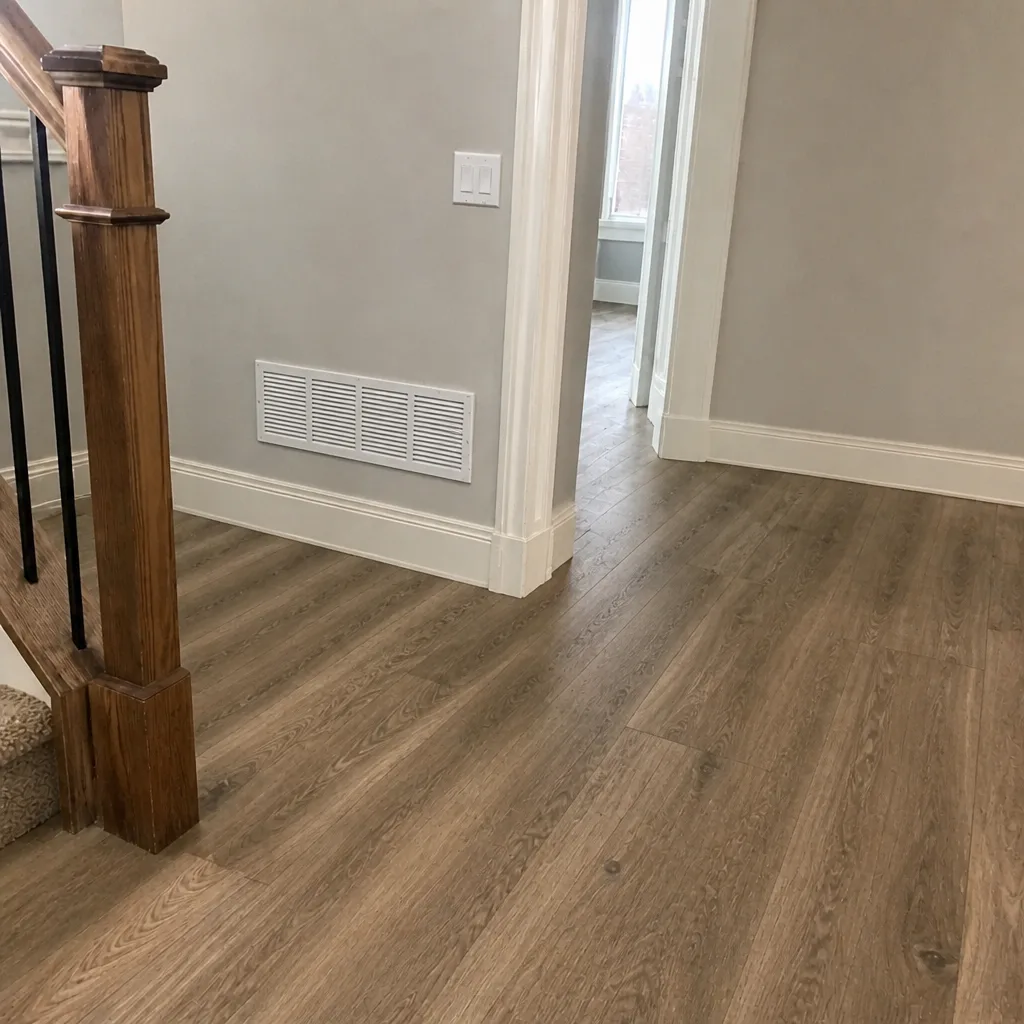 After
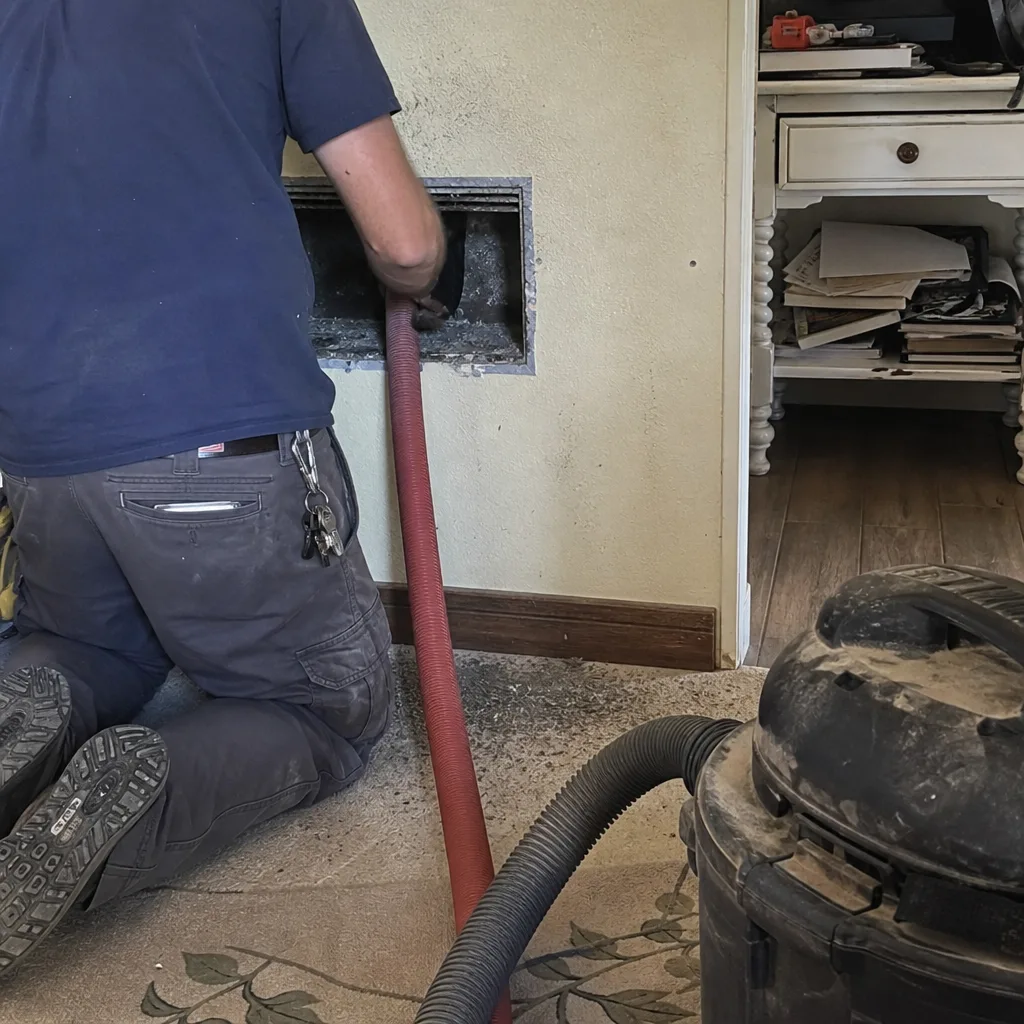 Before
 After
 Before
 After
When to Call a Professional
Call a professional if you’re seeing visible dust on supply registers or film on furniture within days of cleaning, if the HVAC produces a musty odor when it starts up, or if you’re dealing with persistent allergy symptoms that don’t improve with filtration changes. Also call if you’ve had pest activity, a roof or plumbing leak near ductwork, or recent renovation that pushed drywall dust into the system. New-home buyers should call for an inspection before move-in. Property managers of Parker rentals should schedule an inspection between tenants if the previous occupant had pets or smoking activity. And if the dryer takes noticeably longer than it used to, treat that as a dryer-vent call, not a comfort issue. Parker Air Duct Cleaning Pros offers free estimates in Parker – call (877) 820-9183.
Frequently Asked Questions
Air duct cleaning in Parker typically costs $350 to $650 for a single-system standard home and $650 to $950 for larger homes or heavier contamination. The written estimate sets the final price, and a proper quote should cover duct runs, plenums, registers, the air handler, blower, and coil as one flat price. Call (877) 820-9183 for a free estimate – no coupon required.
Cheap quotes usually reflect a contact-vacuum sweep of visible registers and little else, not a source-removal cleaning of the system. Rotobrush brush agitation, HEPA extraction, and negative-pressure containment add equipment and time that a $99 coupon can’t cover. Ask exactly what’s included, what equipment will be on-site, and whether camera evidence is provided – those answers will separate the quotes that are actually complete from the ones that aren’t. Call (877) 820-9183 to see what a full-system quote looks like for your Parker home.
Before-and-after camera footage of the deep duct runs, plenums, and coil is the clearest proof a cleaning happened. A legitimate provider should be willing to shoot the same views before and after, from the same angle, and show you the change. Register-level photos alone are not proof – anything can be wiped clean. Ask to see the inside of a return trunk before and after; that’s where the difference shows. Call (877) 820-9183 for an estimate that includes documentation.
For most Parker homes, once every three to five years is the realistic interval – tighter than the national “five to seven” standard because altitude-driven longer HVAC runtime and semi-arid dust accelerate accumulation. Homes with pets, allergy sufferers, recent construction activity, or a recent remodel should lean toward the three-year end. Homes with no risk factors and a well-sealed system can safely stretch to five. Call (877) 820-9183 for an inspection-based estimate.
Yes. At Parker’s 5,700-plus feet, air density is roughly 20 percent lower than sea level, so the HVAC system must run longer cycles to move the same heat and deliver the same setpoint. Longer runtime means more air cycles and more particulate deposits on duct walls per year than the identical system would experience at a lower elevation. That’s why cleaning intervals here trend shorter, not longer. Call (877) 820-9183 for a Parker-specific recommendation.
Routine duct cleaning is treated as a maintenance item and is generally not covered by homeowner insurance or standard home warranties. Coverage can apply in specific scenarios – water damage, fire restoration, or a covered remediation – but you would need to confirm directly with your carrier and your specific policy. For everything else, plan on duct cleaning as a maintenance expense. Call (877) 820-9183 for a free estimate and a clear scope of what’s included.
The Bottom Line
Parker’s altitude, semi-arid climate, and rapid construction activity create a duct contamination profile that generic national cleaning advice doesn’t address. Longer HVAC runtimes push more dust through every cycle; construction dust migrates into existing systems from neighboring builds; leaky older ductwork re-pollutes a just-cleaned system within a season. Proper cleaning here means source removal – mechanical agitation with Rotobrush equipment, HEPA extraction through Nikro units, and negative-pressure containment – not a contact-vacuum sweep of visible registers. It also means cleaning the coil and plenum, not just the ducts. Ask for one flat price for the whole system, ask for before-and-after camera footage, and ask how often your specific home warrants cleaning. Written estimates set the final price.
Our technicians have up to 8 years of experience on Front Range systems, and every job is documented with before-and-after footage.
For a free estimate on air duct cleaning, dryer vent service, HVAC cleaning, duct repair and sealing, or sanitizing in Parker, call (877) 820-9183. We answer 24/7. Fast dispatch from 7am to 7pm, Sunday through Friday.
Written by the team at Parker Air Duct Cleaning Pros.