
Nikro Air Duct Cleaning in Parker: A Homeowner’s Guide
Most homeowners judge a duct cleaning job by how the technician talks, not by what the equipment actually does. That gap is exactly how substandard work gets paid for at professional rates. Nikro systems are the part of the job you can verify if you know what you’re looking at: negative-pressure vacuum units built to pull fine particulate out of a duct system and hold it in a HEPA-rated collection chamber, not just loosen dust so it settles somewhere else in the house. This guide explains what those units do, why Parker’s conditions make suction capacity matter more than usual here, and how to question a contractor before work begins.
First, why does equipment choice matter so much for air ducts?
Air ducts are a closed loop with the living space. Whatever you dislodge inside them has to go somewhere, and if the vacuum can’t capture it, it goes into your air. That’s the whole reason professional duct cleaning exists as a separate trade from general HVAC repair.
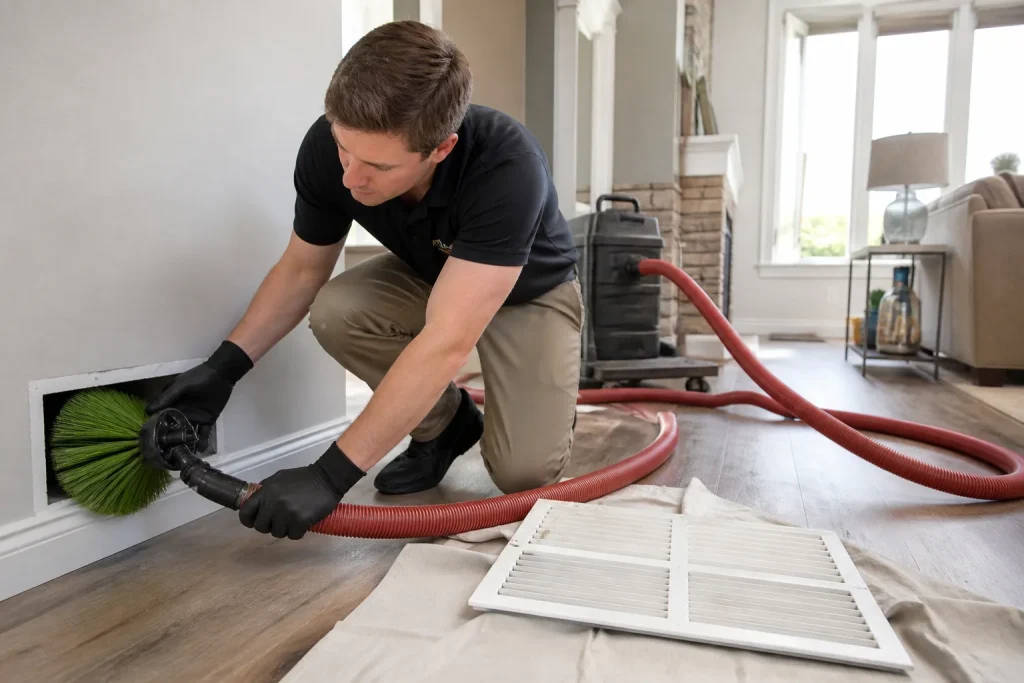
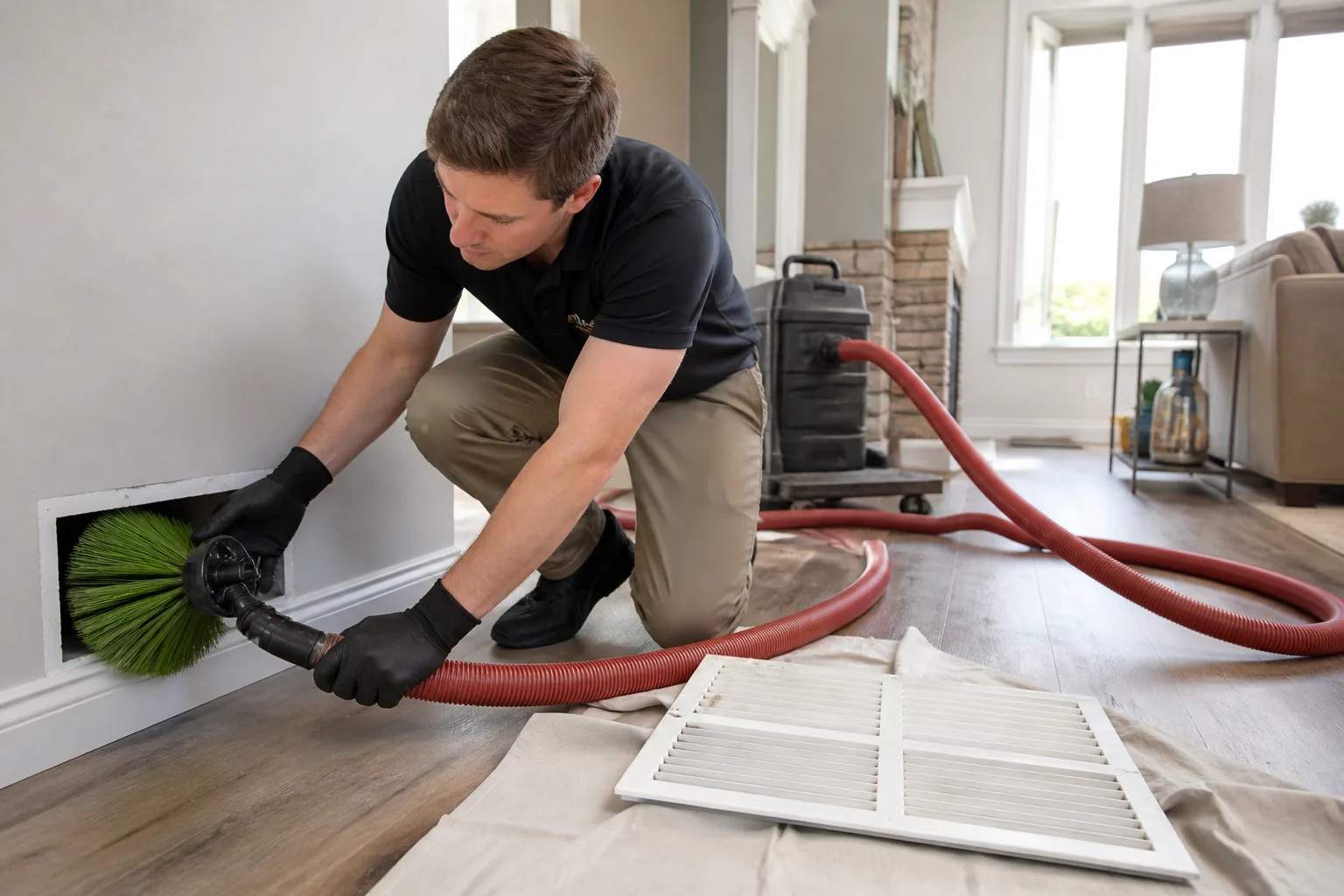
A rotary brush without real suction behind it is a dust dispersal tool. We’ve seen what that looks like on the other end: a homeowner pays for a cleaning, and dust films the furniture again within a couple of days because the fine particulate was never captured, only moved. Nikro vacuum systems pair an agitation head with a HEPA-rated collection chamber and, critically, enough airflow to keep the whole duct under negative pressure while the brush works. The contaminant leaves the duct and stays in the machine.
What does negative air pressure actually accomplish that a portable vacuum can’t?
Negative pressure means the air pressure inside the duct is lower than the room around it, so air flows into the duct (and toward the vacuum) rather than out into your living room. A shop vac or a consumer-grade unit can’t hold that condition across a whole house duct system. Its airflow is too low and its filtration too coarse.
CFM, or cubic feet per minute, is the honest measure here. Think of it as how much air the unit can move per minute. Whole-house duct cleaning needs enough CFM to keep every run under suction at once, including the long branches that feed upstairs bedrooms. A garage-style vacuum running through a single hose connection doesn’t get there. You can watch for it during a job: if the technician is working a brush through a supply register and you feel air pushing out of a nearby return, the system isn’t under proper negative pressure and dust is escaping into the room. That’s a simple, observable tell.
Why does Parker’s climate make high-capacity suction non-optional?
Parker sits at high elevation in a semi-arid climate, which changes what accumulates inside a duct system and how fast. Low humidity means less moisture binding dust into the duct walls, so fine particulate stays loose and airborne longer. Seasonal wind carries dust and pollen across the Front Range, much of it small enough to pass a standard filter and settle in the return-side ductwork where airflow slows. Heating season pushes dry, dusty air through the system for months, and the swing between heating and cooling cycles keeps that material moving.
The result is a duct system that collects a lot of fine, dry particulate. Fine particulate is the hardest thing for a weak vacuum to capture and the easiest thing to recirculate into the house. That’s the practical reason we treat higher-capacity, HEPA-rated equipment as the baseline for Parker homes, not an upgrade. A portable vacuum may clean a light layer of surface dust in a short run; it doesn’t manage the volume of fine material a Parker system tends to hold.
How do you verify a contractor’s Nikro unit is running at spec before work starts?
Ask. A contractor who owns and understands their equipment answers these in plain language. One who doesn’t will change the subject. Before work begins:
- Ask what vacuum unit they’re using and its rated CFM. They should be able to tell you without a pause. If they don’t know, they don’t own the spec.
- Ask to see the HEPA filter chamber. A Nikro system has a collection chamber with filtration rated for fine particulate. Seeing it is reasonable. Asking to see the inside of a sealed collection chamber is not.
- Ask how they maintain negative pressure across the full system. The answer involves a single high-capacity vacuum connection plus controlled openings, not a shop vac at every register.
- Ask what they do about containment during cleaning. Abatement Technologies air-filtration units are commercial-grade containment equipment. When a contractor uses that class of equipment residentially, it signals they’re treating the job as a contaminant-control problem, not a housekeeping task.
- Ask for before-and-after photos from a recent comparable job. Equipment is only as good as the result it produces.
One thing we appreciate about a homeowner who asks these questions: it’s a short conversation. The right contractor isn’t offended. They’re usually a little pleased someone finally asked.
What’s the difference between Nikro’s residential and commercial duct cleaning setups?
The core principle is the same, but capacity and configuration differ by the size and layout of the system they’re serving. Residential Nikro configurations are built around the runs and register count of a single-family home: a whole-house vacuum connection, adequate CFM for the duct volume, and a HEPA-rated collection chamber sized for the job. For a typical Parker single-family home, that’s the right setup.
Larger properties, multi-zone systems, and commercial spaces call for different configurations: higher CFM, multiple connection points, and containment equipment scaled to a bigger volume of air and dust. If you’re managing a larger property in Parker with multiple HVAC zones, the right question to ask before hiring is whether the equipment is sized for your system. A residential unit pushed past its capacity loses its negative-pressure advantage mid-job. The equipment has to match the building.
This is also why we work across the full chain rather than just cleaning: if ducts need air duct cleaning and also have gaps or disconnected joints, sealing those before cleaning holds the results longer. Our HVAC cleaning service handles the air handler and coils where dust collects alongside the ducts. Separate from all of it, dryer vent cleaning is worth scheduling as its own job because lint buildup in a dryer vent is a fire risk, not a comfort issue.
What should a properly completed Nikro job look like on inspection?
You don’t need to inspect the inside of a collection chamber to judge whether the job was done right. Here’s what you can check yourself:
- Look into a register with a flashlight before and after. The duct interior should look materially different: light-colored surfaces instead of a dust film, no visible debris on the bottom of the run.
- Check the return registers. Returns are where the heaviest accumulation collects. A clean supply side with a still-dusty return side means the work wasn’t finished.
- Watch for dust settling in the days afterward. Some fine dust redistribution is normal for a day. A visible film on furniture for several days after the job means the particulate wasn’t captured.
- Ask for the before-and-after photos. A professional job has a photographic record. Review it against what you see yourself.
- Ask whether sanitizing was needed. Guardsman-grade sanitizing treatments are available for air quality and sanitizing work. If there’s a mold or odor concern, ask the technician to identify the source before treating.
If you’ve got a Honeywell or Aprilaire filtration unit on the furnace, the technician should be able to tell you how it interacts with the cleaning: whether the filter was clean going in, and whether the media needs attention afterward. Equipment familiarity matters at that stage of the job.
When to call a pro
Duct cleaning is one of the few home services where a weak tool can look identical to a strong one during the job. If you’re not confident in your equipment, or you don’t want to climb into the attic to inspect ductwork yourself, this is a scheduled professional job, not a weekend project. A bad DIY attempt with a shop vac doesn’t clean ducts; it redistributes dust and can dislodge joints. Call us and we’ll walk you through what the job involves.
Related services in Parker: air duct cleaning, HVAC cleaning, dryer vent cleaning, plus duct repair and sealing and air quality and sanitizing, available through Parker Air Duct Cleaning Pros.
The Bottom Line
Nikro equipment matters because it’s the physical difference between moving dust and capturing it. If you’re comparing quotes in Parker, ask the CFM question, ask to see the HEPA collection chamber, watch for air pushing out of nearby returns during the job, and check the before-and-after photos. The answers tell you more than the price does.
Our technicians have up to 8 years of experience with professional-grade duct cleaning systems, and we work across air duct cleaning, dryer vent cleaning, HVAC cleaning, duct repair and sealing, and air quality and sanitizing so you’re not coordinating separate contractors for connected problems. One flat price per system is agreed before work starts, with before-and-after photos of your own ducts. If you’re in Parker and need help, Parker Air Duct Cleaning Pros offers free estimates – call (877) 820-9183. We answer 24/7. Fast dispatch from 7am to 7pm.
Frequently Asked Questions
Nikro air duct cleaning refers to using Nikro’s negative-pressure vacuum systems to pull dust and fine particulate out of a duct system rather than just agitating it. The difference is HEPA-rated collection and enough airflow capacity to keep the whole system under negative pressure during the job. A standard service using a portable vacuum can’t hold that condition across a full residential system, so fine particulate ends up back in the air.
Ask directly: what model vacuum unit, what CFM, and what filtration rating. A contractor running Nikro or Rotobrush systems will answer immediately and can show you the equipment. Rotobrush rotary-brush extraction systems paired with Nikro HEPA-rated vacuum capture means agitation and extraction are handled by purpose-built tools, not improvised ones. If the answer is vague, keep looking.
Yes, in a specific way. High elevation and low humidity keep fine dust and pollen dry and airborne, so material settles in ductwork slowly and loosely rather than binding into a heavy layer. That dry, fine particulate is the hardest kind for a weak vacuum to capture and the most likely to recirculate. It makes high-capacity suction a practical need in Parker, not a premium upgrade.
More than you’d think. Register interiors should look visibly cleaner, return-side accumulation should be gone, and the supply runs should show light-colored duct walls instead of a dust film. Ask for photos of the return side specifically, since that’s where the heaviest accumulation collects and the part of the job most easily skipped. Any questions on this, call (877) 820-9183 for a free estimate.
It helps, and a technician familiar with those systems can tell you how. Honeywell and Aprilaire filtration and humidity equipment works alongside the duct system, so a technician who understands it can spot whether the filter media or humidity controls need attention after cleaning. Cleaning the ducts doesn’t replace the equipment, but it means the equipment is running on a clean system rather than circulating already-loaded air.
Written by the team at Parker Air Duct Cleaning Pros.
Need Air Duct Cleaning Help?
Call Parker Air Duct Cleaning Pros - the local pro we connect you with is licensed and insured, here with fast help in Parker.
(877) 820-9183