
Last updated November 25, 2026
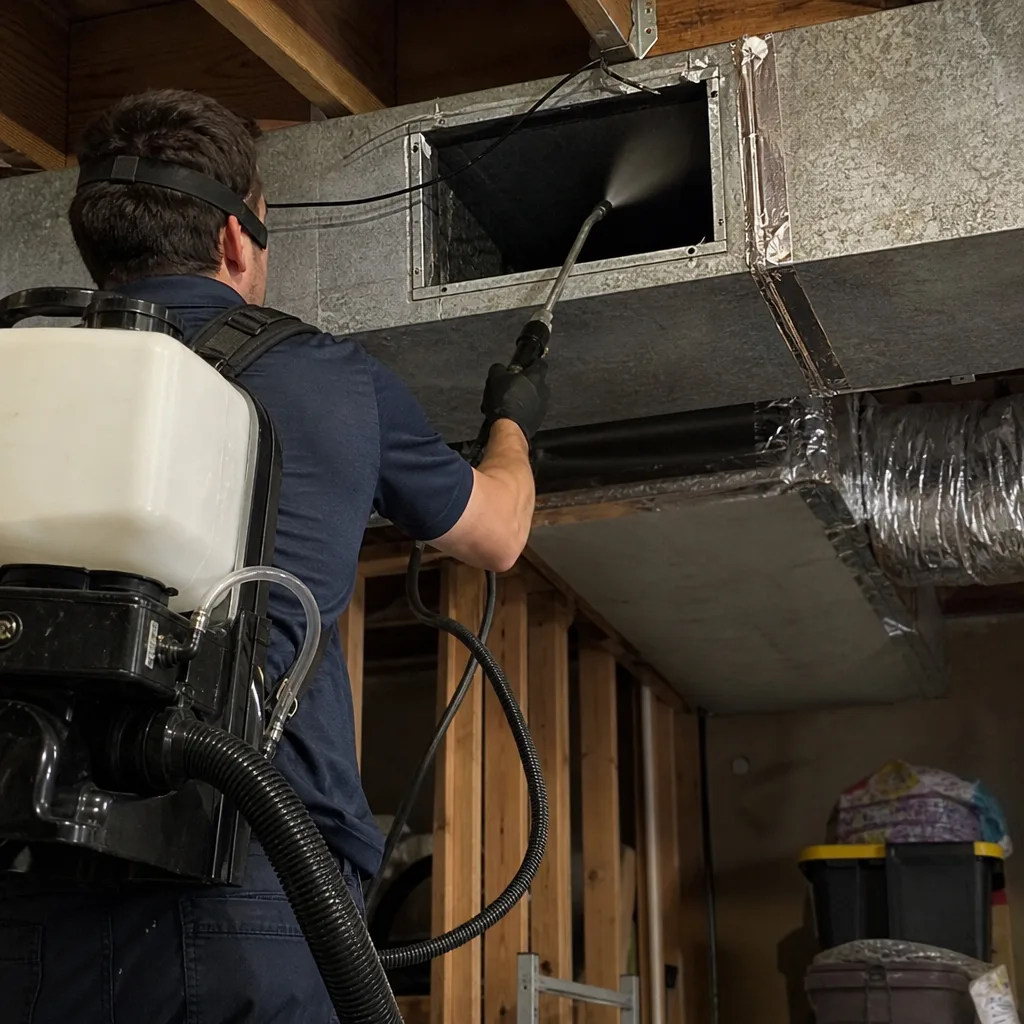
 Whole-home duct cleaning
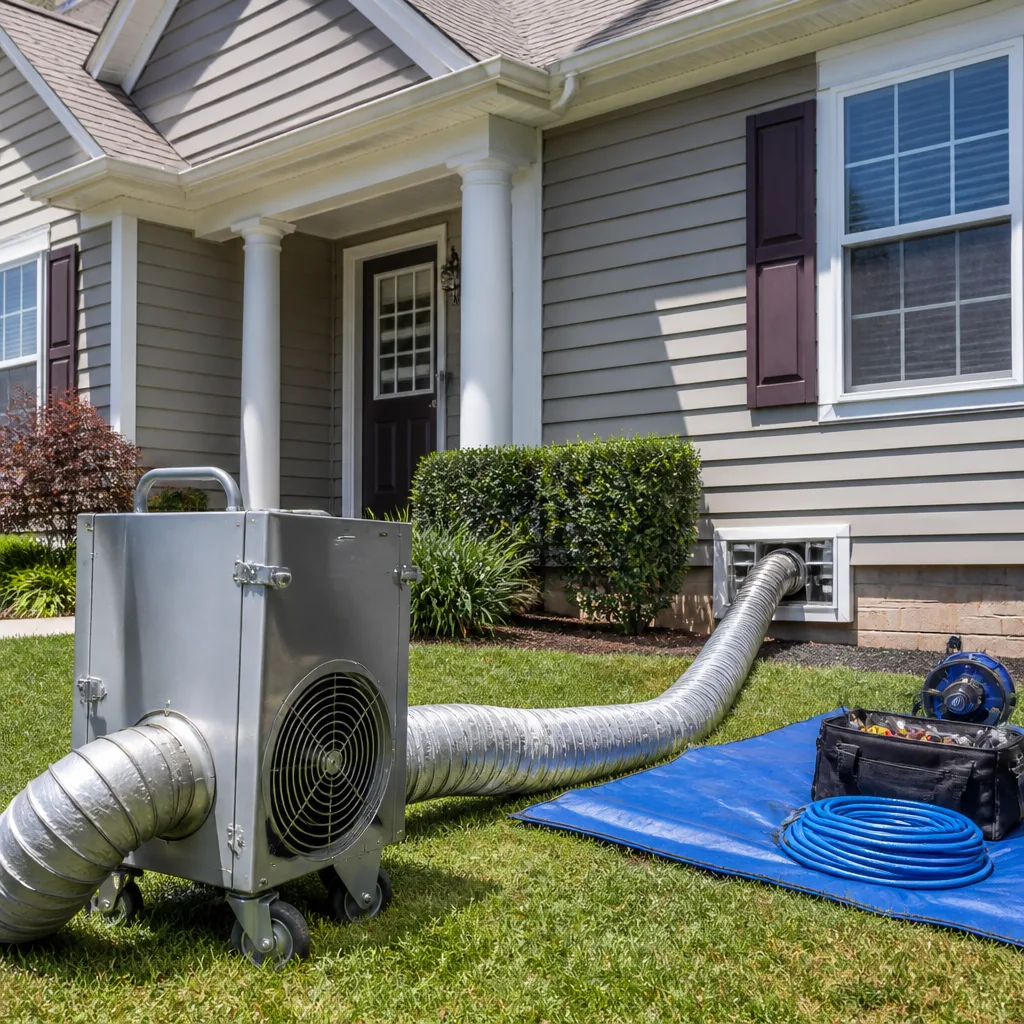
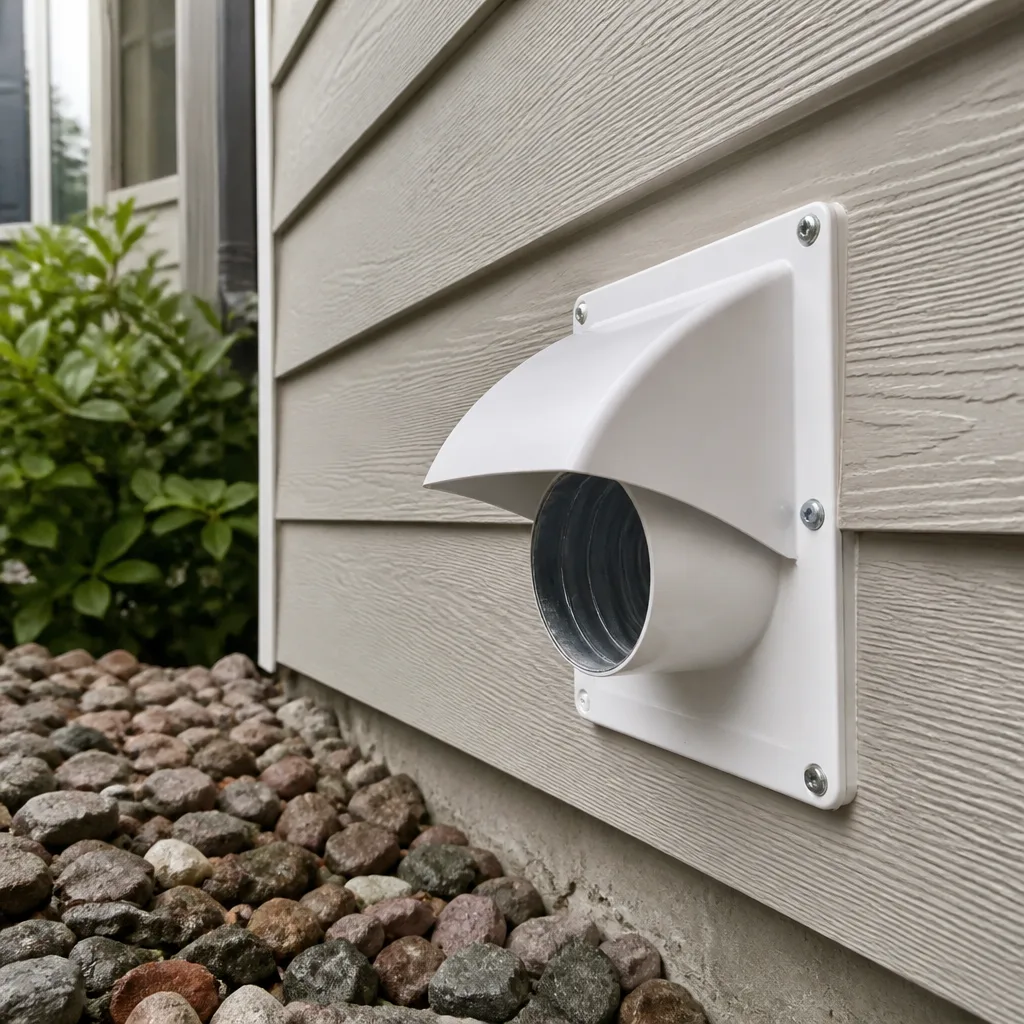 Dryer vent cleaning
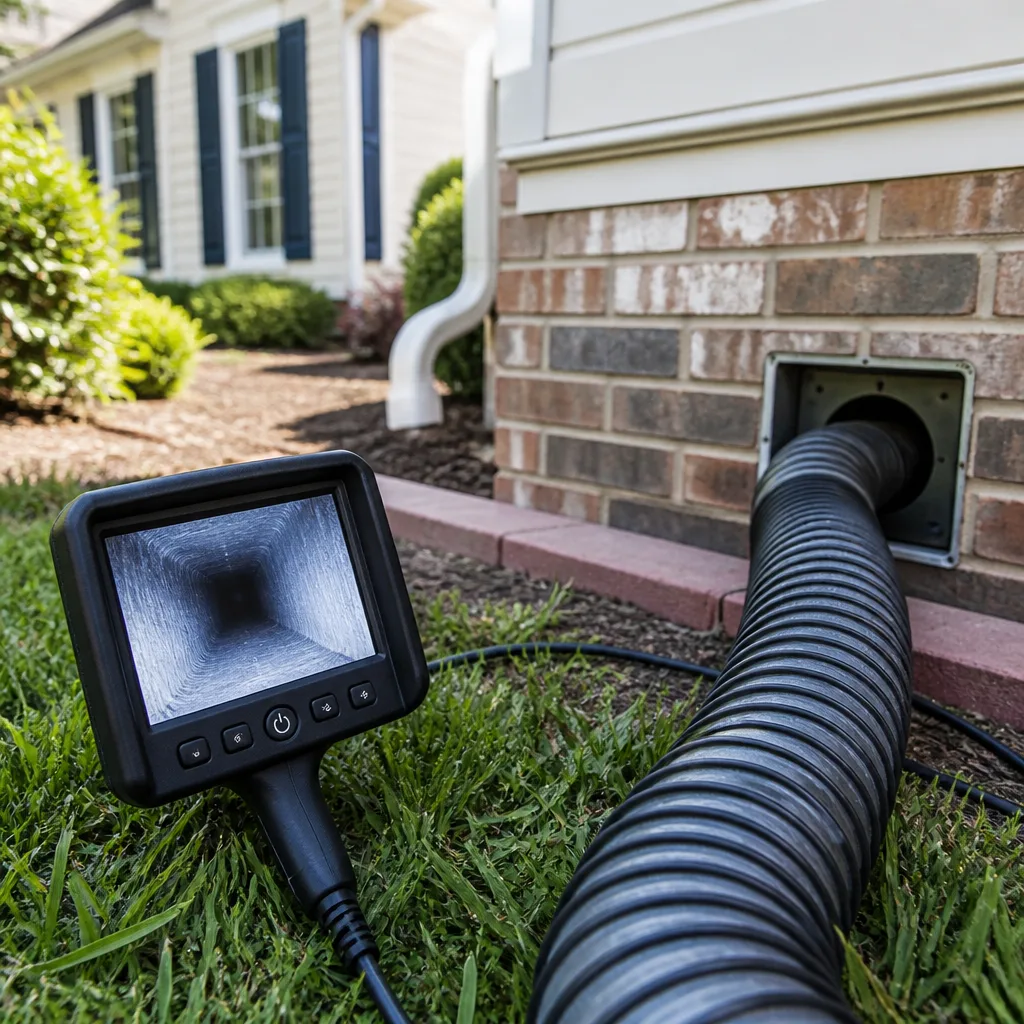 Camera inspection
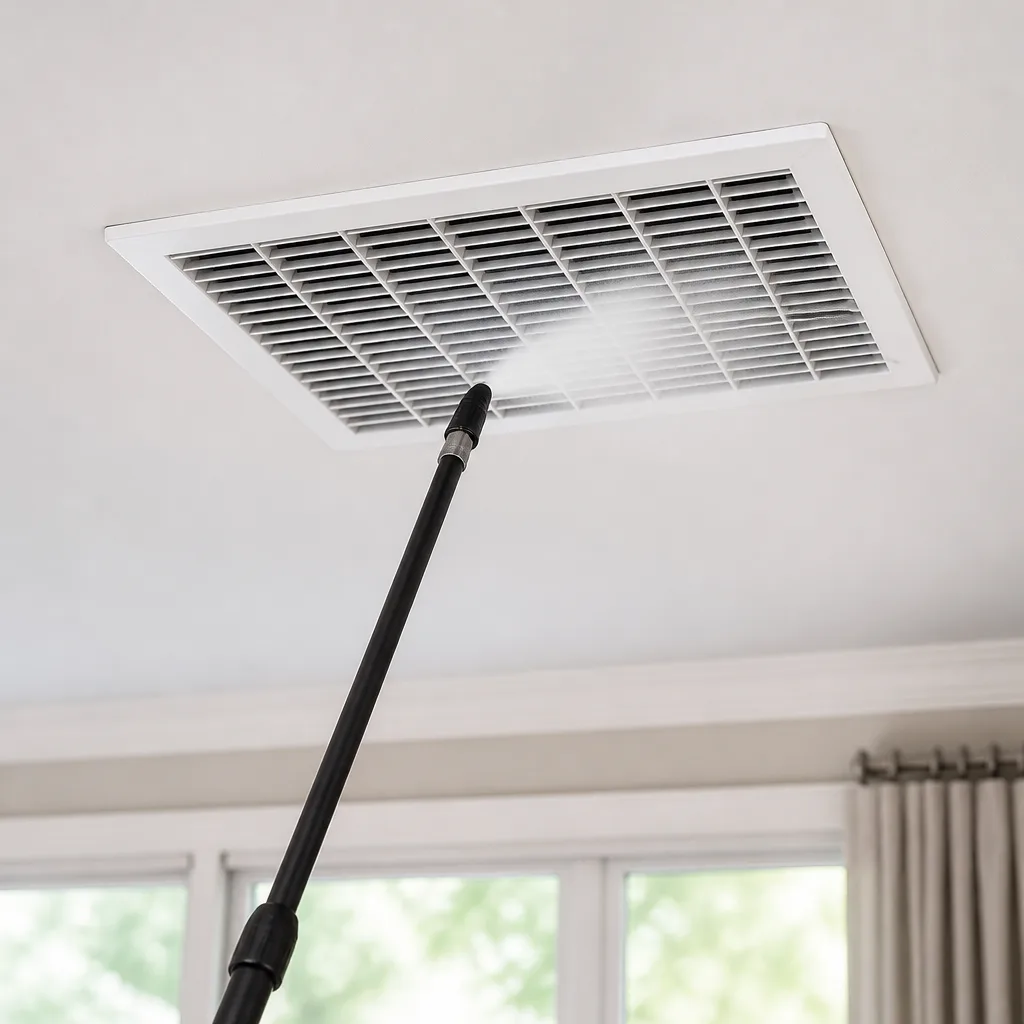 Sanitizing & deodorizing
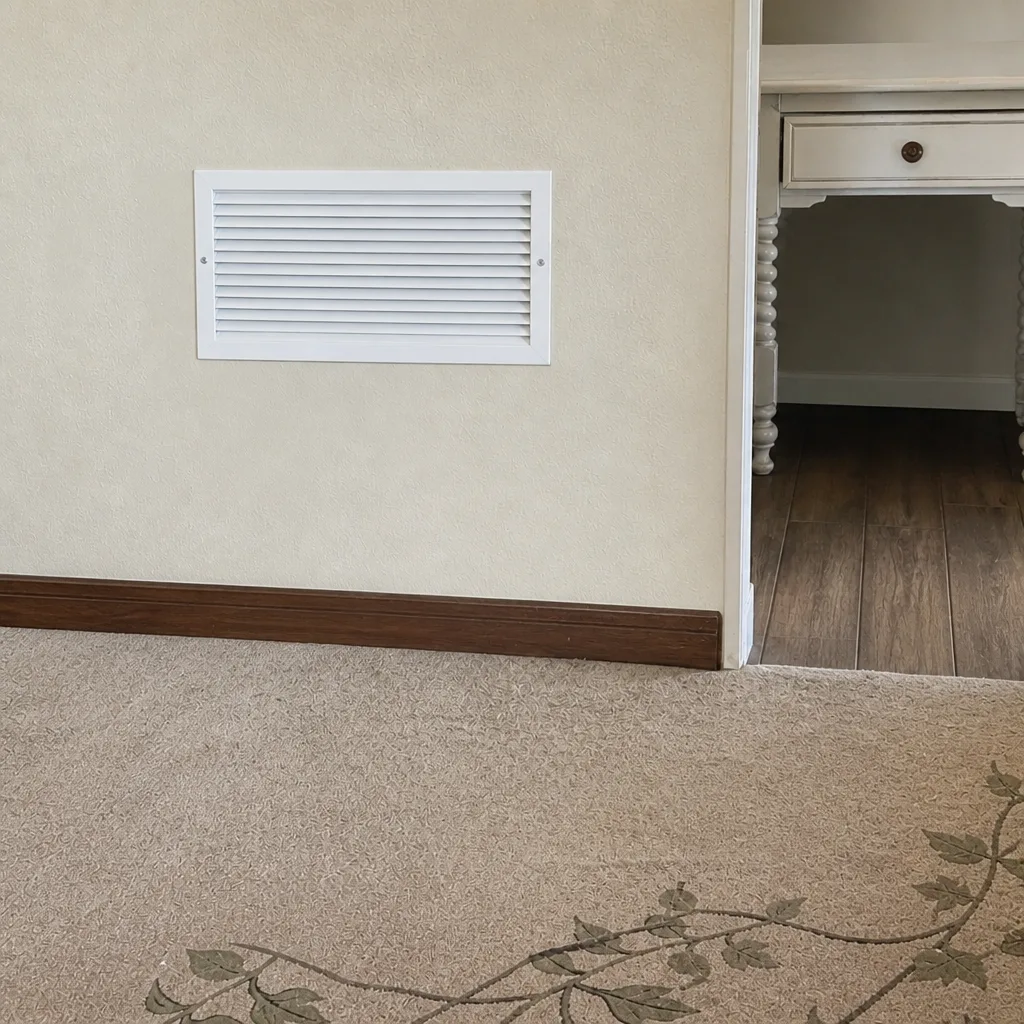
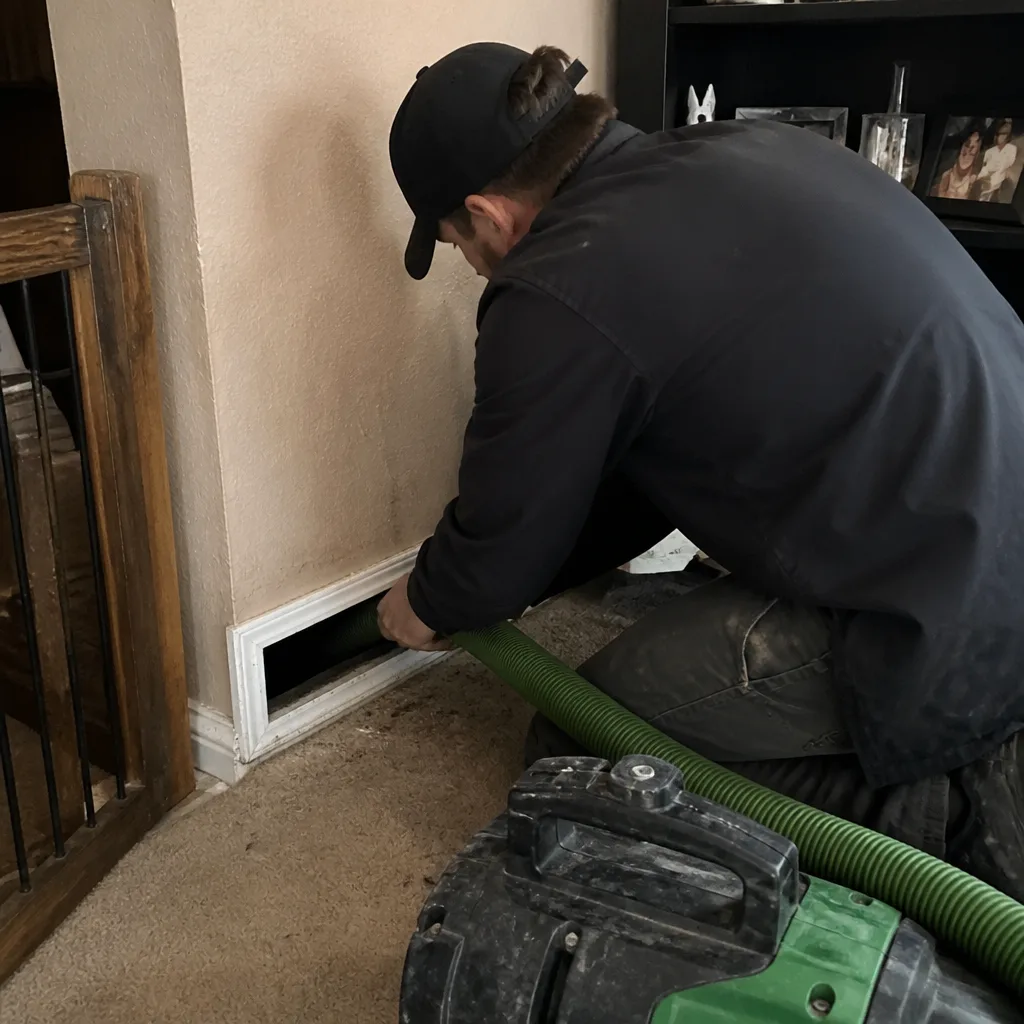
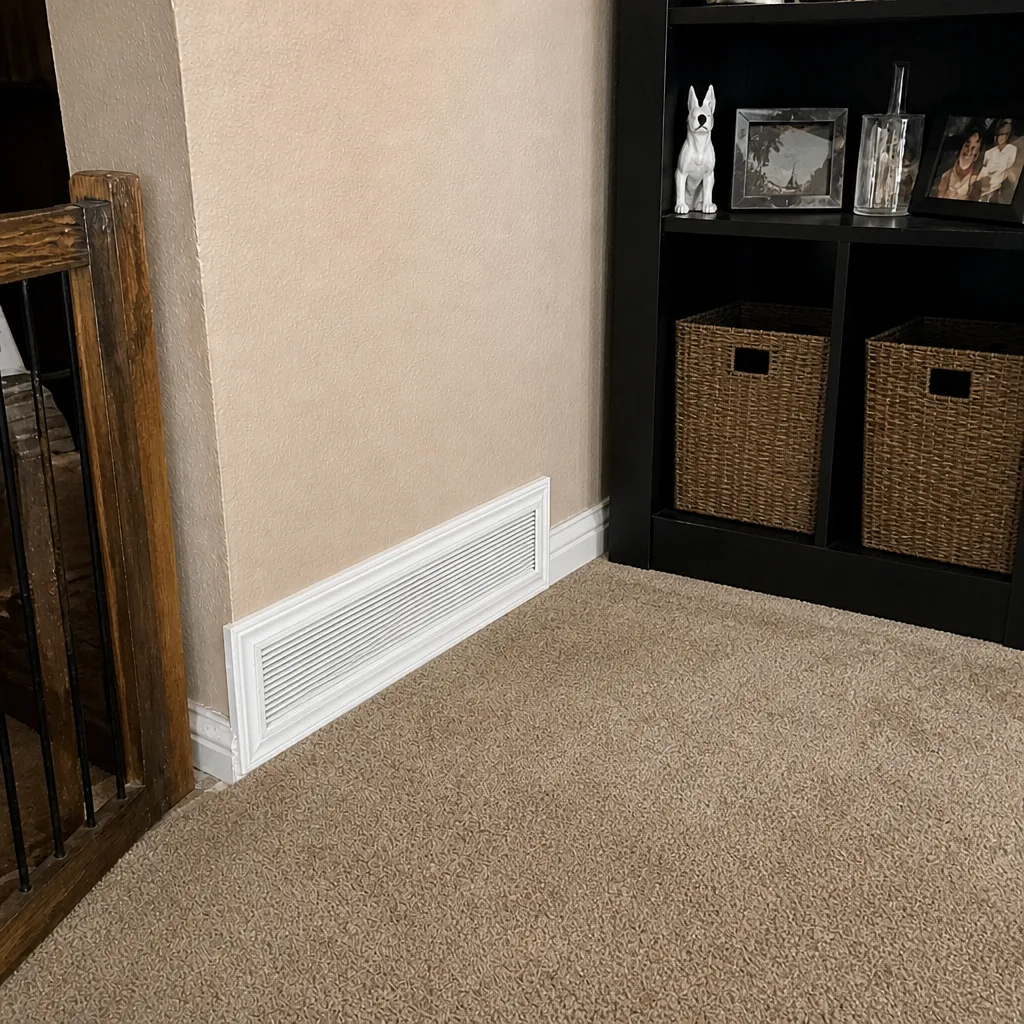
Whole-system duct and dryer vent check with before-and-after photos - you see exactly what came out of your vents
That "$99 whole-house special" is a bait ad - the real number appears once they are in your hallway, or the "clean" is a shop-vac at the register. We photograph the inside of your ducts before and after instead.
Air Duct Cleaning Warning Signs: A Parker Homeowner’s Reference Guide
Visible dust blowing from your registers is a late-stage warning sign. It means your ducts are so loaded that the system is re-entraining debris it can no longer hold, and by the time you can see it, you’ve likely been breathing it for months. The earlier signals are quieter and far more useful: a filter that loads faster than its rating suggests, a room that never quite catches up, dust gathering on the wall near a supply register. This guide teaches Parker homeowners to read those early-stage signals in the context of their home type and local climate, so a decision gets made before air quality or system efficiency is meaningfully compromised.
Quick Answer
The warning signs that matter most for a Parker home are: filters loading faster than expected, uneven room temperatures, visible dust streaks near supply registers, musty or metallic odors, and symptoms that track with local triggers like wildfire smoke or nearby construction. Visible debris blowing from vents is a late-stage sign, not an early one. When several of these signals show up at once, it’s worth an inspection before the problem compounds.
Styles & brands we work with
- Whole-home duct cleaning
- Dryer vent cleaning
- Camera inspection
- Sanitizing & deodorizing
Table of Contents
- The Early-Stage Signals Worth Watching
- Filter Loading: The First Honest Signal
- Parker-Specific Triggers: Smoke, Renovation, New Construction
- Ducts vs. HVAC: Telling the Symptoms Apart
- What Odors Actually Mean (And What They Don’t)
- The Decision Matrix: Monitor, Inspect, or Clean
- Common Mistakes to Avoid
- When to Call a Professional
The Early-Stage Signals Worth Watching
Most published lists of duct cleaning warning signs describe the advanced, obvious stage: dust clouds from the register, visible mold at the vent, a system that rattles. Those are real. But by the time a Parker homeowner sees them, the contamination has been there for a while. The signs that let you act early are subtler, and they show up on the surfaces and in the rooms you already live with every day.
Here’s what to look for during the first honest walk-through of your home’s registers and returns.
- Dust loading on the return grille: A film builds up in days, not weeks, on the fins of the return-air grille. That rate tells you the air carrying it is already loaded.
- Streaking on walls and ceilings near supply registers: Fine trails of dust where the jet of supply air hits a surface. This is the air stream depositing what it’s carrying.
- Uneven room temperatures: One bedroom noticeably warmer or cooler than the rest, especially when other rooms feel fine, points to restricted airflow inside the ducts or balance.
- Staticky surfaces and higher-than-usual house dust: A room that feels dustier in the same season it used to, with the same cleaning schedule.
- An air handler that seems to run longer: The blower working harder and longer for the same result is air struggling to get through.
- Fresh filter showing discoloration within days: A filter that’s gray to the edges within a week or two is pulling from a dirty upstream duct, not just room air.
None of these signs, alone, means you need a cleaning. They mean you need to start paying attention. If two or three of them show up at once, that’s the signal to escalate to an inspection. In our experience working in Parker, homeowners who track these signs catch a system that’s trending dirty well before they’d otherwise notice a problem.
Filter Loading: The First Honest Signal
Your air filter is the most reliable early-warning sensor in your home’s HVAC system. If a filter that usually lasts three months is completely loaded in one, the ductwork is delivering more particulate to it than it should. That’s the cleanest way to detect a dirty duct run without pulling anything apart.
The key is to know your filter’s baseline. A MERV 8 filter in a typical Parker home might load on a three-month cycle. A MERV 11 to 13 filter, which catches finer particulate, loads faster by design and needs more frequent checks. If your filter is loading faster than its own history suggests, the ductwork is the first place to investigate. If it’s loading faster because you switched to a higher MERV rating, that’s expected, not a problem.
A simple approach:
- Note the date each time you change the filter. Write it on the edge with a marker.
- Check the filter at the halfway point of its expected life. If it’s more than half-loaded, that’s a faster-than-expected load.
- Track two consecutive cycles. One fast cycle can be seasonal. Two fast cycles is a pattern.
- If the pattern holds, have the duct system inspected rather than cleaning it blindly. A duct run with a failing seal or a disconnected joint will load a filter fast too, and it needs a repair, not a cleaning.
This is the difference between reactive and proactive for a Parker homeowner. Anyone can wait for the dust cloud. Reading the filter takes two minutes and tells you the same story months earlier. Our technicians are trained to check this diagnostic before recommending a cleaning, because a filter problem often has a duct-sealing cause underneath it. Learn more about how a proper air duct cleaning decision is made on our service page.
Parker-Specific Triggers: Smoke, Renovation, New Construction
Some warning signs are universal. Others are specific to where you live and what’s happening on your block. Parker has three recurring triggers that push a clean duct system toward a dirty one faster than the usual timeline, and homeowners here should watch for them separately from the everyday signals.
Wildfire smoke events
Front Range wildfire smoke seasons have become routine enough that Parker homeowners know the drill: windows closed, HVAC running, filter changed. What’s easy to miss is where the smoke actually settles. Fine smoke particulate that bypasses the filter’s efficiency and rides through the return-side ductwork can deposit in the trunk and branch runs, where it collects quietly through the season. After a heavier smoke event, a filter that loads fast is a sign that the ducting absorbed some of it. Anyone who’s had two or three heavy smoke seasons in a row with no duct inspection is worth a look.
Post-renovation periods
Drywall dust, sawdust from trim work, and fine sanding particulate get pulled into the return air during a remodel, especially if the system is running while the work is happening. Even a short renovation is enough to load the return side. If the ductwork hasn’t been cleaned since before the renovation, that’s the clean-and-seal threshold more often than not.
New construction on adjacent lots or in your own home
A newly built home carries construction dust in its ducts by default: drywall fines from the building process, debris from the trades, and framing dust. Any Parker homeowner who’s moved into a home built within the last several years should assume the ducts carry construction particulate unless there’s documentation showing a post-construction cleaning was performed. New construction happening next door is a separate concern: airborne dust from adjacent grading and building can be drawn in through the return, and the sign to watch is a filter that loads unusually fast during that period.
Each of these triggers moves the inspection decision earlier. If the trigger has happened, an inspection is worth scheduling even if you only see one other warning sign.
Ducts vs. HVAC: Telling the Symptoms Apart
Not every symptom that looks like a duct problem is a duct problem. A Parker homeowner with poor airflow or dusty rooms may have dirty ducts, but may equally have dirty coils, a failing air handler, or a leaking duct run. The three look similar from the register and require different responses. Getting this wrong means paying for a duct cleaning that doesn’t solve the symptom.
Here’s how to separate them before you schedule anything.
- Dirty evaporator coils: Airflow restricted, coil cabinet warm to the touch, cooling runs weak on hot days. Duct cleaning won’t fix it. Coil cleaning will.
- Failing air handler or blower: Weak supply pressure from every register, blower running longer, unusual noise. The duct run may be clean. The blower needs a technician.
- Duct leakage: Some rooms weak, some strong, and a supply register that barely moves air. Sealing the leak is the repair; cleaning the duct first, before sealing, wastes the effort.
- Dirty ductwork: Consistent low-level dust loading, fast filter loading, dust streaking at multiple registers. The ducting itself is the source.
When HVAC cleaning and duct cleaning overlap is where it gets practical. If the system hasn’t had a combined cleaning in a long time, the coils, blower, and cabinet are usually carrying the same grime as the ducts, and doing them together is more efficient than splitting the job across two contractors. That’s the whole-system idea behind our HVAC cleaning work: one pass over the full air path, not a duct-only job that leaves the grimy components behind. When you call, ask the technician to walk through which component is producing the symptom you’re seeing before you commit to any scope. A specialist who does this work every day can tell you in a few minutes from the register which part of the system is the actual problem.
What Odors Actually Mean (And What They Don’t)
Odor is the warning sign homeowners most often misread, in part because it’s the sign that produces the most anxiety. A musty smell coming from a register is worth taking seriously. A metallic smell is usually a different issue. The key is that neither tells you, on its own, whether cleaning, a repair, or an air quality test is the right next step.
Musty or earthy odors
Musty air at a register most often points to moisture somewhere in the system. In a dry-climate home like Parker’s, standing water in the ductwork itself is uncommon, but condensation on a poorly-sealed run, a damp evaporator coil pan, or a return that runs through an unconditioned space can produce the same smell. This is where the decision gets real: if the ductwork has visible mold growth or a persistent damp smell that returns after cleaning, cleaning alone doesn’t solve it. An air quality test and a moisture inspection come first. Then clean, and then fix the source so it doesn’t return.
Metallic or “hot” odors
A hot metallic smell at a supply register is most often the heat exchanger coming on for the first time in a season, or a motor or belt warming up. It’s not usually a duct contamination sign. If it persists beyond a startup cycle, that’s a call for an HVAC technician, not a duct cleaner. Electrical or burning smells follow the same rule.
What odor does and doesn’t tell you
- Does: Point to a moisture problem, a contamination source, or a dead component of the system.
- Doesn’t: Tell you how dirty the ducts are. A clean duct run can carry a smell from the coil behind it. A dirty duct run can have no smell at all.
- Doesn’t: Confirm mold. That requires a test, not a nose.
For persistent musty odors, our Parker Air Duct Cleaning Pros team treats the sanitizing step as separate from cleaning, because certain musty conditions need a full air quality consultation before we recommend a cleaning scope. Guardsman-grade sanitizing treatments are available when the source has been confirmed, not as a general add-on. The odor question first, the cleaning answer second.
The Decision Matrix: Monitor, Inspect, or Clean
The practical question a Parker homeowner faces is not “are my ducts dirty?” but “what do I actually do next?” That’s where a simple decision framework helps. The combination of a warning sign plus the household context determines the response. Here’s the framework we use:
- One mild signal + no household risk factors = monitor. Filter loading slightly fast, one dust streak, no health concerns. Watch for two cycles and note changes before spending anything.
- Two or more signals + no risk factors = inspect. Have the system looked at, but don’t assume cleaning. A technician checks the return side, the coil, and the supply runs before recommending scope.
- Any signal + a recent smoke event, renovation, or new construction = inspect. One trigger event and one sign together usually means the ducting needs to be looked at.
- Two signals + an allergy sufferer, young children, or a new-home purchase of unknown history = inspect, with a written scope. Cleaning is often but not always the answer. Get the scope in writing before any work starts.
- Visible debris blowing from registers, persistent musty odor, or visible mold = clean and repair, after inspection. This is the late stage where the decision is made for you.
- Persistent musty odor after cleaning, or visible mold anywhere in the system = air quality test, then repair and sanitize. Cleaning alone won’t solve a moisture source.
Notice the pattern: inspect comes before clean at almost every stage. The only scenarios where cleaning is the clear first answer are the ones where the problem has advanced past early warning. For most Parker homeowners, the value of this matrix is catching the decision at the inspect stage, when a light cleaning and a duct sealing can prevent a much bigger job later. Ask any contractor you talk to whether they’ll scope the job in writing and show you evidence of what’s actually dirty. A specialist should be able to.
Common Mistakes to Avoid
- Waiting for visible dust before acting. Visible dust from the register is the late-stage sign. If you’re waiting for it, you’ve waited past the early signals that would have let you act months sooner.
- Changing to a higher MERV filter and calling it a fix. A MERV 13 filter catches more particulate but doesn’t clean the duct behind it. Loading it faster just means you’re catching the same debris at the filter instead of the source.
- Cleaning before checking for leakage. If a supply run is disconnected or a joint is leaking, a duct cleaning pushes more dust out of the gap than into the vacuum. Inspect, seal, then clean.
- Treating a musty smell with sanitizing alone. Sanitizing a damp system without fixing the moisture source is a temporary fix. The smell returns within a season.
- Assuming a general HVAC company handles ducts the same way. A generalist crew is usually running a shop-style vacuum and a standard brush. Rotobrush and Nikro equipment are purpose-built for duct cleaning, and the difference shows in what’s actually extracted, not what’s vacuumed.
- Skipping the written scope. A verbal “we’ll clean the whole system” doesn’t tell you which runs are included or whether the coil cabinet is part of the job. Get the scope in writing before work starts.
- Forgetting the dryer vent. A dryer vent is a fire risk, not a comfort issue. It belongs on the same inspection list, even though it has nothing to do with the HVAC ductwork. That’s the case for bundling it with our dryer vent cleaning service instead of scheduling it separately.
When to Call a Professional
Call a professional when two or more early signals appear together, when a triggering event like a heavy smoke season, a renovation, or a new-build move-in has passed and the system hasn’t been looked at, or when a musty odor has been present for more than a few weeks. Call sooner if anyone in the home has respiratory or allergy concerns and the warning signs are showing at the same time. The case for professional equipment isn’t about consumer tools being inadequate for cleaning a register; it’s that extracting contamination from inside a duct run at scale requires a rotary brush system (we use Rotobrush) and HEPA-rated vacuum capture (we use Nikro), plus negative-pressure containment so the debris leaves the house rather than recirculating through the living space. That’s a job for specialist equipment and someone who runs it every week. Our technicians have up to 8 years of experience in this specific trade.
If you’re in Parker and reading this guide has moved you from monitor to inspect, Parker Air Duct Cleaning Pros offers free estimates in Parker. Call (877) 820-9183. We answer 24/7. Fast dispatch from 7am to 7pm, Sunday through Friday. The estimate is a written scope of what’s actually dirty, priced per job, not per vent.
See the difference
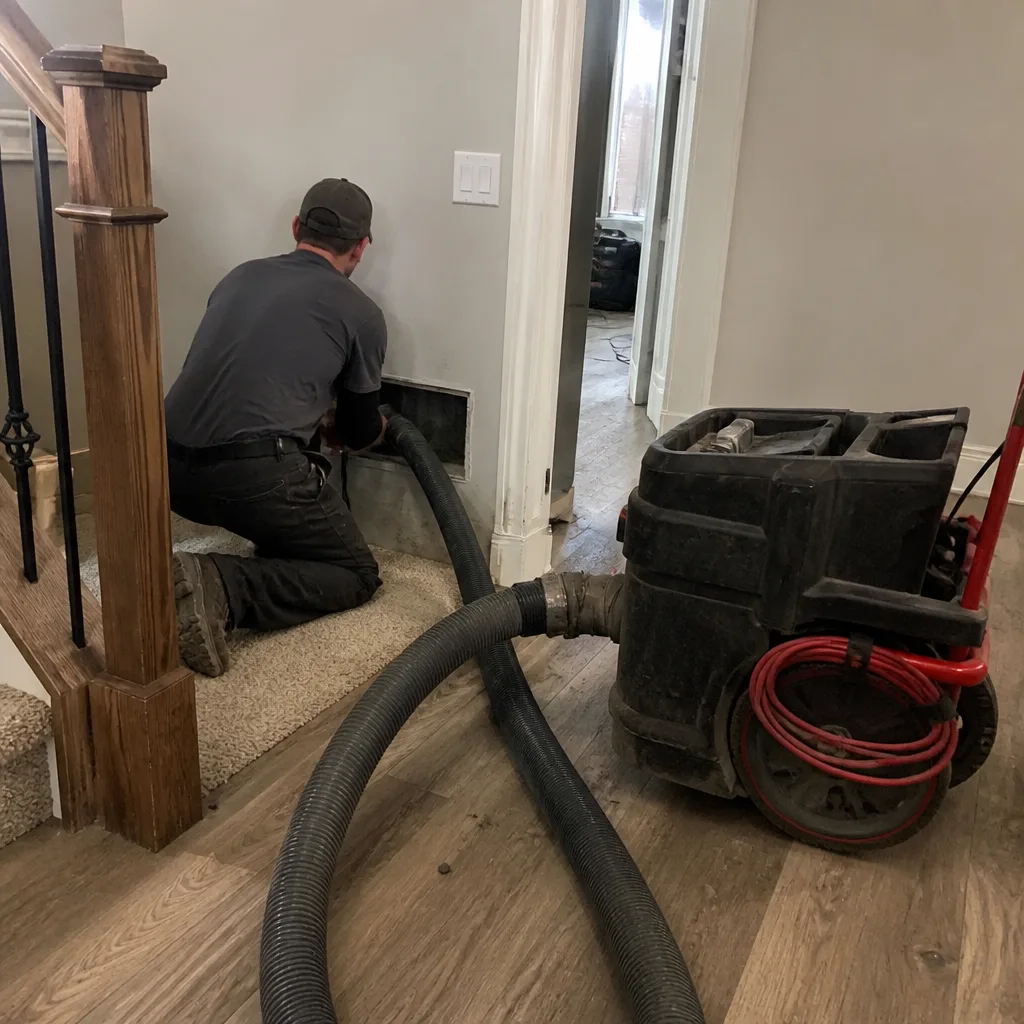 Before
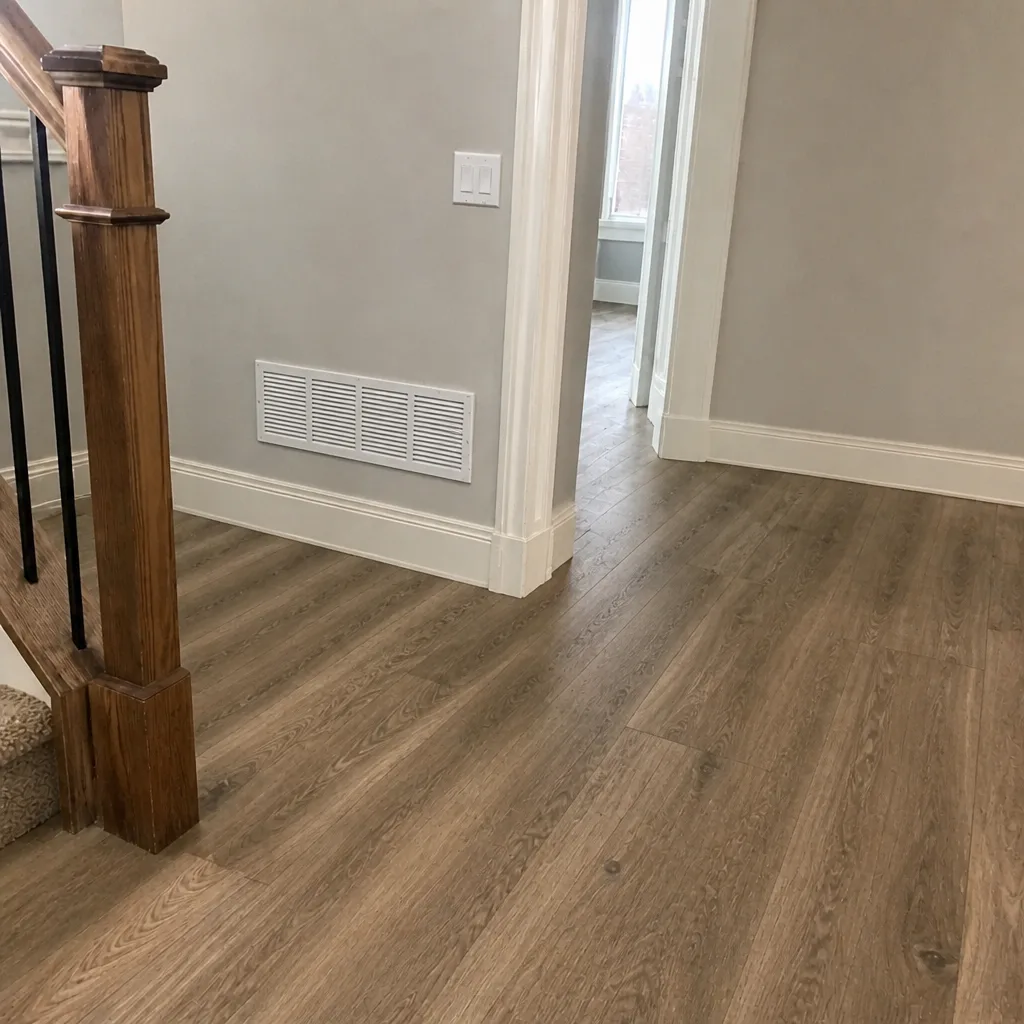 After
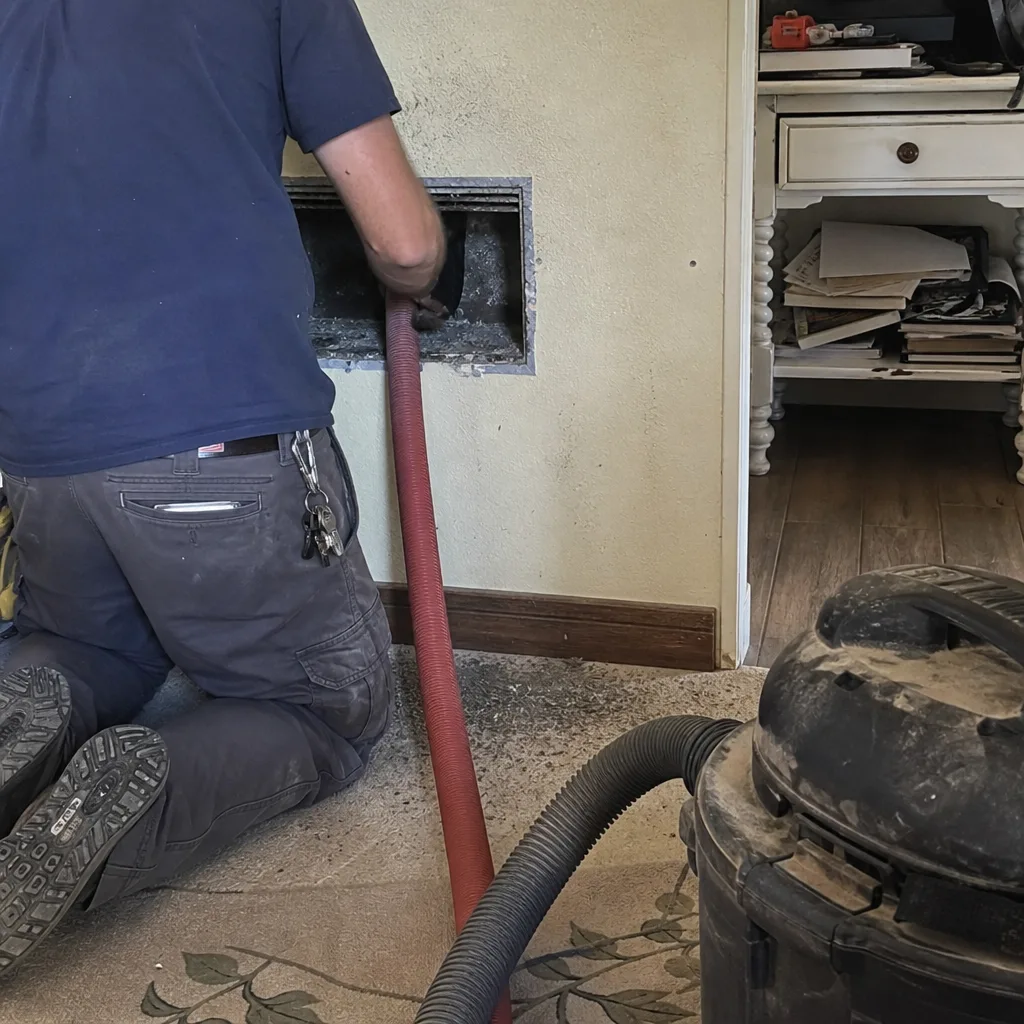 Before
 After
 Before
 After
Frequently Asked Questions
The clearest early signal is a filter that loads faster than its own MERV rating and history suggest, combined with dust streaking near supply registers or uneven room temperatures. Those signals mean an inspection is worth scheduling. Visible debris blowing from a register is a late-stage sign, not an early one. Call (877) 820-9183 for a free estimate – it’s a written scope, not a guess.
Yes. Visible dust from a supply register means the duct is so loaded the system can no longer hold the debris it’s carrying, so it’s re-entraining it into the living space. This is the late-stage signal that most published warning lists describe. An inspection and a cleaning are the appropriate response, along with a check for duct leakage that might be contributing. Call (877) 820-9183 to book an estimate.
A musty smell from a register most often means moisture somewhere in the system, not necessarily mold in the ducts themselves. In a dry-climate home like Parker’s, that’s usually condensation on a poorly sealed run or a damp coil pan rather than standing water in the ductwork. Persistent musty odor needs an air quality test before any cleaning. Call (877) 820-9183 to talk through the scope first.
There’s no universal answer that fits every home, so skip the “every X years” rule. The right interval depends on filter loading history, trigger events (smoke, renovation, new construction), household members with respiratory concerns, and whether a post-construction cleaning was done. Tracking your filter loading and trigger events is more useful than a calendar. Call (877) 820-9183 for a free estimate when your signals point that way.
Not always, but the early signs after a heavier smoke season are worth reading. If the filter that follows a smoke event loads faster than usual, or if musty or ashy odors linger weeks later, an inspection is worth scheduling. A light cleaning and a duct sealing afterward is often the fix. Call (877) 820-9183 to book an estimate.
Duct cleaning focuses on the return and supply ductwork. HVAC cleaning extends to the coil, blower, air handler cabinet, and other components inside the system itself. In practice a system that hasn’t been cleaned in a long time usually needs both, because the coil and cabinet carry the same grime as the ducts. Doing them together is more efficient than splitting the job. Call (877) 820-9183 to walk through which scope applies to your home.
The Bottom Line
The warning signs that change your decisions are the quiet ones: a filter loading fast, a room that never quite catches up, a dust streak near a supply register. Visible dust is the late-stage confirmation, not the early warning. For a Parker homeowner, the practical flow is track your filter and trigger events, watch for streaks and temperature problems, and inspect before you clean. When the signals point to a cleaning, ask for a written scope, and confirm the contractor uses purpose-built duct-cleaning equipment with proper containment rather than a general-purpose vacuum. If you’re ready to move from monitoring to inspecting, call Parker Air Duct Cleaning Pros at (877) 820-9183 for a free estimate. We answer 24/7. Fast dispatch from 7am to 7pm, Sunday through Friday.
Written by the team at Parker Air Duct Cleaning Pros.